
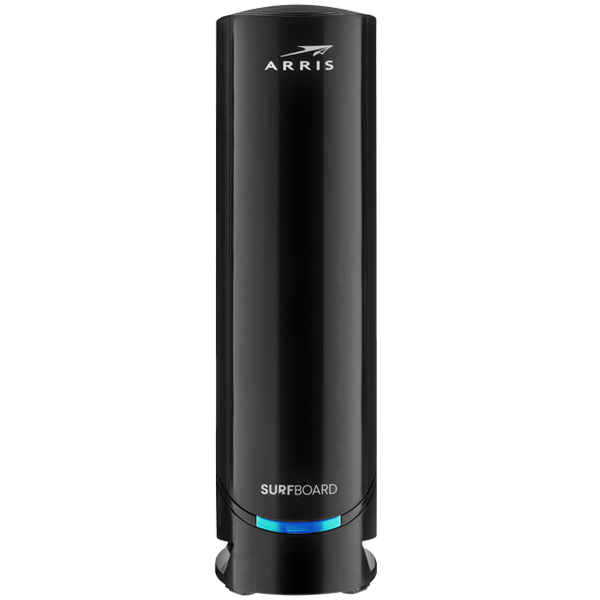
ARRIS SURFboard G18: Specs, Features, Pros & Cons
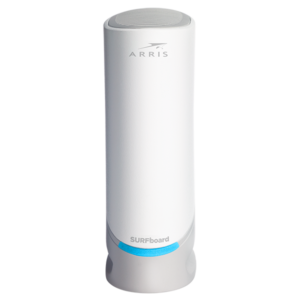
The G18 is a cable modem and a dual-band Wi-Fi 6 router in one box, built for the job of replacing a rented cable gateway. Send the provider's box back and the monthly rental line on the bill goes with it. The question is not whether this is the best hardware available but whether it is enough for your connection, and on a plan of a gigabit or less, in an apartment or a small house, it is.
The rest of the package is deliberately plain: DOCSIS 3.1 on the modem side, two Ethernet ports, and a coverage rating suited to a modest space. There is no multi-gig port anywhere, and the download rating tops out around a gigabit, which is the honest ceiling of the product.
That ceiling is the thing to check against your own plan. If your provider sells you more than a gigabit, this modem becomes the bottleneck immediately, and a faster combo or a separate modem and router is the better starting point. If it does not, nothing about the specification will be noticed in daily use.
Cable providers authorize modems individually, and one that is not on your provider's approved list will not be activated, so check the list before ordering. The cable connector is also the only way in: there is no Ethernet WAN input, so a move to fiber retires the whole box, router included.
There are no telephone ports, so a bundled voice service needs separate hardware.
Category strengths
Where the ARRIS SURFboard G18 trails the median
- A much lower max download speed ?1,000 Mbps vs 2,500 Mbps (median)
- No Multi-gig Ethernet ?
How this VS Score was computed
Score 40: each known spec is measured against the median of all modems (6 products), then weighted; 50 means level with that median. In classes of six or more, a value beyond the class’s 10th–90th percentile range counts as that limit, so one extreme product cannot set the scale. 82% of the scoreable weight could be used; unknown values, features not applicable to this class and proxies (battery capacity where a rated life exists) add or remove nothing.
| Specification | This product | Cohort median | Score weight | Points moved |
|---|---|---|---|---|
| Max download speed | 1,000 | 2,500 | 2 | −60.0 |
| Multi-gig Ethernet | No | 67% of the class have it | 0.8 | −38.4 |
| Built-in Wi-Fi router | Yes | 67% of the class have it | 0.5 | +25.0 |
| DOCSIS version | DOCSIS 3.1 | DOCSIS 3.1 | 2 | +0.0 |
| Downstream channels | 32 | 32 | 0.8 | +0.0 |
| Upstream channels | 8 | 8 | 0.5 | +0.0 |
| Ethernet ports | 2 | 2 | 0.8 | +0.0 |
| Voice / telephony ports | 0 | 0 | 0.2 | +0.0 |
Not scored: Max upload speed (unknown: not scored); Link aggregation (unknown: not scored); Weight (unknown: not scored); Fanless (unknown: not scored).
Editor’s note
The modem is certified for Xfinity, Spectrum and Cox, and the router side is dual-band Wi-Fi 6 rated AX1800 with a 1,250 sq ft coverage claim, two gigabit Ethernet ports, WPA3, a guest network and app-guided setup through SURFboard Central. For an apartment household of streamers and laptops on a 300-800 Mbps plan, that is enough router for the job.
Two LAN ports is tight if you have a TV, console and desk to wire. The G18's upstream filter is fixed at the old 5-42 MHz split, according to ARRIS's datasheet, which means it cannot take advantage of the boosted upload tiers cable ISPs are now rolling out. Its sibling, the ARRIS SURFboard G20, exists precisely to fix that. And like every combo, it's one box doing two jobs, so a fault in either half takes the whole connection down.
If your provider has already announced faster upload tiers, the G20 is the model to buy, because a modem cannot change its upstream split after it leaves the factory.
Specifications
Quality bars show where each figure sits between the lowest and highest of the 6 modems this VS Score is measured against.
Performance
Connectivity
Features
Design
Networking assessment
What the specification table does not say on its own: what this device needs to connect, what speeds are realistic, what costs extra, and where it falls short. Every statement below is read from the verified sheet or written by an editor — nothing is estimated.
Test environment
Research-based assessment: this brief is derived from the manufacturer’s published specifications for the ARRIS SURFboard G18 and the documents listed under Sources and verification. We have not run this unit on our own network, so nothing here is a measurement of ours.
Connection requirements
Needs a cable internet provider whose network supports DOCSIS 3.1; a modem is only usable once the provider has approved that model, so check their compatibility list before buying.
Listed provider compatibility: Certified for Xfinity, Spectrum and Cox; works with other major US cable ISPs.
It includes a Wi-Fi router, so no separate router is required for a basic setup.
Throughput expectations
The DOCSIS link is rated for 1,000 Mbps down and an unspecified rate up; your plan speed, not the modem, is the practical ceiling.
Security support
Security-update cadence is not something manufacturers publish as a specification; see Support and updates below.
Known limitations
Not offered, according to the spec sheet: multi-gig Ethernet.
4 specifications are not published by the manufacturer and are shown as Unknown rather than guessed.
Support and updates
We have not found a published firmware support-lifetime commitment for this model. Update policies differ widely between brands; check the support page linked under Sources and verification before relying on it for a long deployment, and treat a device that has stopped receiving security updates as due for replacement.
Sources and verification
Where the specifications come from
- Official product pagesurfboard.com
- Datasheet or manualarris.my.salesforce.com
- Independent testingrtings.com
Verification
- First published
- Specifications last checked
- Sheet completeness
- 9 of 13 specifications verified; the rest show as Unknown and are never estimated or scored
- Page type
- Product specification page — Compiled from the manufacturer’s published specifications and the cited sources; this is not a hands-on test.
- Basis
- Research-based: specifications and editorial text were compiled from the documents listed here and the manufacturer’s published data. We have not tested this unit ourselves; where independent measurements are mentioned they belong to the linked publication.
Modems with similar specs to the ARRIS SURFboard G18
Ratings & reviews
No reviews yet. Be the first to share your experience.
The bottom line
The ARRIS SURFboard G18 earns a VS Score of 40, below the median of the 6 modems it is measured against (a score of 50 is level with that median).
- Who it’s for
- Apartments and small homes on gigabit-or-slower cable plans that want the rented gateway gone with minimum thought and need nothing more than Wi-Fi 6 for streaming and laptops.
- Who should look elsewhere
- Anyone whose ISP is rolling out boosted upload tiers, since the fixed upstream filter physically can't use them, plus wired households (two LAN ports) and anyone on a multi-gig plan.
- The trade-off that matters
- It fits a gigabit-or-slower plan today with no headroom left: AX1800 radios, a small-home coverage rating, two gigabit ports and the old upload split all cap what a faster plan could use.
- The main alternative
- ARRIS SURFboard G20: it adds AX3000 Wi-Fi and the switchable diplexer that follows the new upload tiers, the sensible upgrade if you'll keep the box for several years.
The VS Score is calculated from the weighted specifications above, each measured against the median of comparable modems — a shortlisting guide, not a substitute for your own priorities. See how we score.