9 facts in comparison
ARRIS SURFboard G54 vs ARRIS SURFboard G20
Both of these SURFboards can follow a cable provider onto its faster upload tiers, because ARRIS gives each a switchable upstream filter. That removes the most practical difference among today's cable modems and leaves three: the plan speed, the ports, and what happens if fiber arrives.
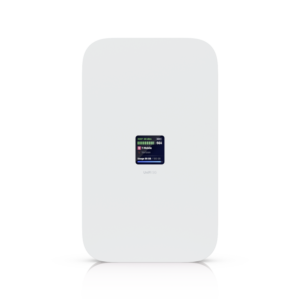
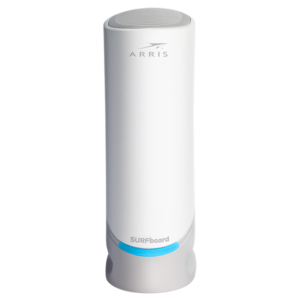
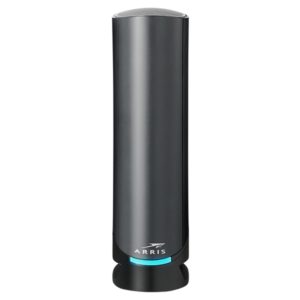
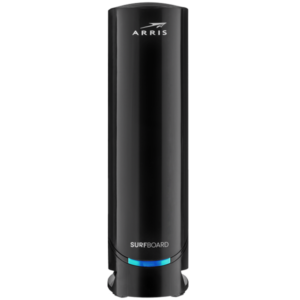
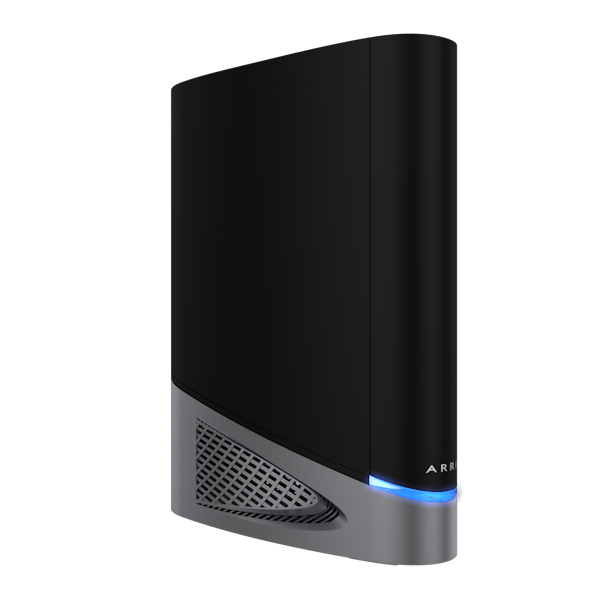
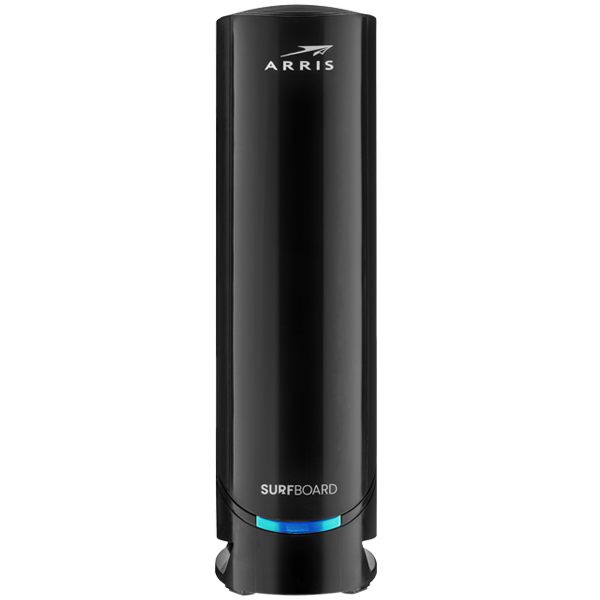
ARRIS sells the G20 for plans up to a gigabit and describes the G54 as best for plans up to 2.5 Gbps. Below a gigabit, the two download at the same rate, so the plan on the bill decides whether the extra modem capacity in the G54 ever gets used. The G20 pairs DOCSIS 3.1 with dual-band Wi-Fi 6 rated AX3000 and two gigabit Ethernet ports. The G54 moves to quad-band Wi-Fi 7 and five Ethernet ports, one of them a 10G port.
That 10G port also works as a WAN input, and the G20 has nothing like it. If fiber reaches the street, the G54 carries on as a Wi-Fi 7 router behind the new line. The G20 retires with the cable service, router and all.
The ports count in a wired home. A television, a console and a desktop already fill the G20's two sockets and call for a switch. The G54 takes all three and a network drive besides, without extra hardware on the shelf.
Both are certified for Xfinity, Spectrum and Cox, and neither has a phone port, so a household that keeps cable voice still needs the provider's gateway. Both also tie the router to the modem, which means the half that ages first decides when the whole box is replaced.
Editor’s note
The G54's feature list and technical specs give two different download ceilings, and the G20's datasheet gives two different upload figures. The headline numbers on both boxes need to be read with care, though the certification list and the hardware itself are not in doubt.
The G54 is the better-equipped box, and its fiber fallback is what I would pay for, more than Wi-Fi 7. Five ports and a router that outlives the cable line make it the steadier long-term purchase for a wired house.
Two ports, Wi-Fi 6 radios and SURFboard Central setup with a web interface behind it suit most apartments and small houses, which is where the G20 belongs. Its weak point is the one every combination unit has: when the router half ages, the modem goes with it. The G20 also has no Ethernet WAN input to keep it useful if the connection ever changes to fiber.
Head-to-head points: every spec is scaled between these products only, so a product can score high here and modestly on its own page, where the VS Score measures it against the median of its class.
Where the ARRIS SURFboard G54 beats the ARRIS SURFboard G20
- A much higher max download speed ?2,500 Mbps vs 1,000 Mbps
- More ethernet ports ?5 vs 2
- Has Multi-gig Ethernet ?
Where the ARRIS SURFboard G20 beats the ARRIS SURFboard G54
No standout advantages.
Key real-world differences
- Max download speedPerformance2,500 Mbps vs 1,000 Mbps — 2.5× more for the ARRIS SURFboard G54
The fastest internet plan the modem can support.
- Multi-gig EthernetConnectivityYes vs No — only the ARRIS SURFboard G54 has it
A port faster than 1 Gbps for multi-gig cable plans.
- Ethernet portsConnectivity5 vs 2 — 2.5× more for the ARRIS SURFboard G54
The number of wired Ethernet ports.
Which one should you buy?
- Best for performance ARRIS SURFboard G54 takes the category 100 to 62 — driven by max download speed (2,500 Mbps vs 1,000 Mbps).
- Best for connectivity ARRIS SURFboard G54 takes the category 100 to 0 — driven by Multi-gig Ethernet (Yes vs No).
- On a budget ARRIS SURFboard G20 is the cheaper way in at $ 218.7, and still scores 53 overall.
- The safe all-rounder ARRIS SURFboard G54 wins 2 of 3 categories and tops the overall VS Score at 100.
Where each one falls short
ARRIS SURFboard G54
- No major spec weaknesses in this matchup — the gaps that exist are small.
- 4 specs are unreported (shown as Unknown) and excluded from its scores.
ARRIS SURFboard G20
- Max download speed: 2,500 Mbps vs 1,000 Mbps
- Multi-gig Ethernet: Yes vs No
- Ethernet ports: 5 vs 2
- 4 specs are unreported (shown as Unknown) and excluded from its scores.
What matters to you?
Drag the sliders to weight each category and re-rank the products to suit your priorities.
Score breakdown
Performance
Connectivity
Features
Design
Specs last verified November 28, 2026ARRIS SURFboard G54: 9 of 13 specs verified (69%)ARRIS SURFboard G20: 9 of 13 specs verified (69%)Unverified specs show as Unknown — never estimated, never scored
Where to buy
Prices and availability may change. Check the retailer before buying. We may earn a commission on purchases.
What reviewers say
The bottom line
A household on a gigabit plan with a couple of wired devices needs nothing more than the G20, which already handles the upload upgrade that the cheaper G18 cannot.
The G54 earns its extra cost in three situations: a plan above a gigabit, a home with more wired devices than two ports can take, or a street where fiber is on its way. In that last case the G54 keeps working as a router afterward. If none of those applies, its Wi-Fi 7 radios mostly serve devices you may not own yet, and the G20's Wi-Fi 6 already covers an apartment or a small house.
This comparison was created with the help of AI. How we work
Latest Modems