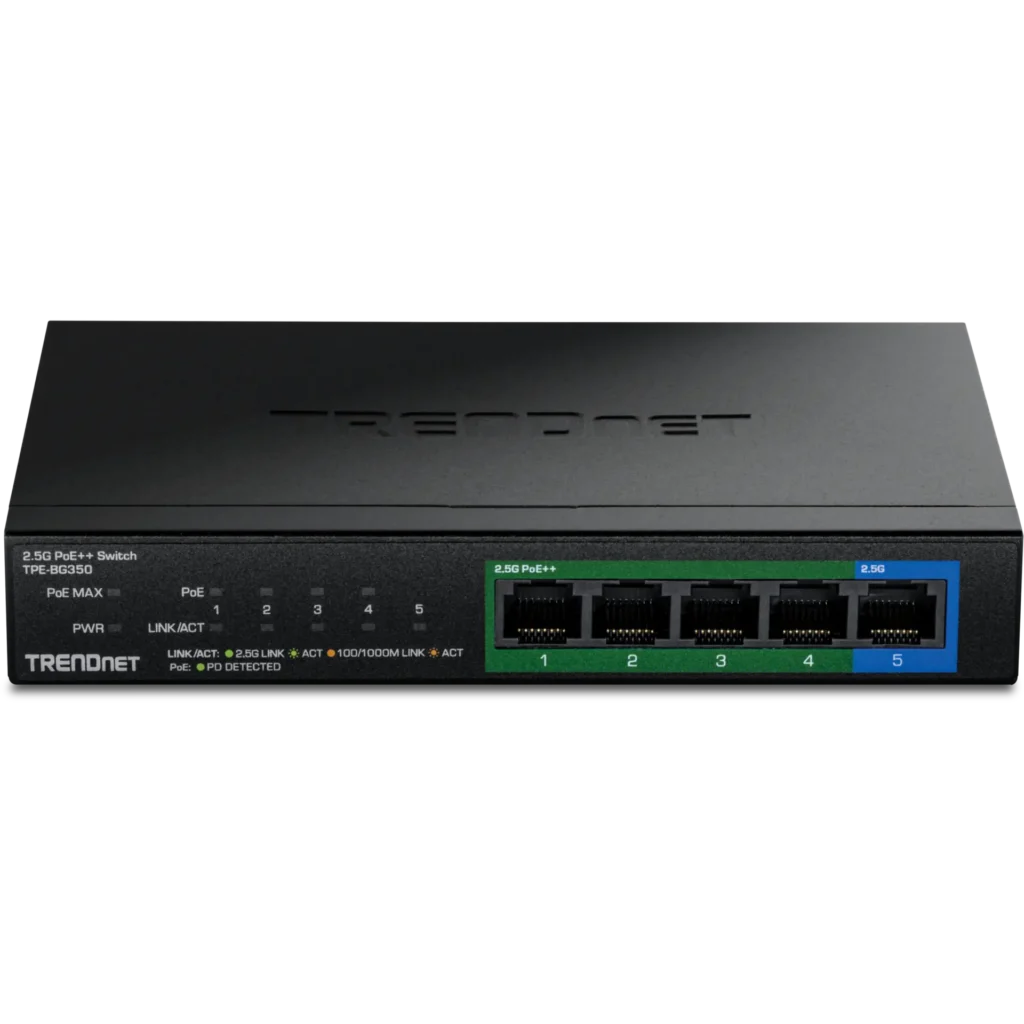
TRENDnet TPE-BG350: Specs, Features, Pros & Cons
Ninety-five watts on a single port is the number that makes this switch interesting. That is enough to run a pan-tilt-zoom camera with a built-in heater, a large outdoor access point, or a display powered entirely over its network cable, equipment that ordinary PoE cannot support.
Four of the five ports offer that higher power standard, and all five run at 2.5 Gigabit, with the fifth acting as an uplink. The case is metal and fanless, and the switch itself draws very little, so it can live in a hallway closet or on a shelf near where people work without being heard.
The specification to read carefully is the power budget. Four ports each rated at 95 W would imply nearly 400 W of capacity, but the actual shared pool is 135 W. In practice that means one very hungry device and a couple of modest ones, or three or four ordinary PoE devices, never four demanding ones at the same time. Plan around the total, not the per-port figure.
It is also unmanaged, so there are no VLANs, no link aggregation and no traffic prioritization, and with five ports it is a small switch by any measure.
That combination points at one job: a compact camera or access-point installation where a few devices need serious power and multi-gig links, and where silence matters. For a general-purpose switch, the port count is too low and the lack of management too limiting. Switches that take on that specific job are usually larger and noisier.
Category strengths
Where the TRENDnet TPE-BG350 beats the median
- More 2.5G ports ?5 vs 0 (median)
- A much lower power consumption ?5.45 W vs 26.5 W (median)
Where the TRENDnet TPE-BG350 trails the median
- Fewer total ports ?5 vs 10 (median)
- No VLAN support ?
- A lower switching capacity ?25 Gbps vs 40 Gbps (median)
- No link aggregation ?
- No Quality of Service (QoS) ?
- A lower forwarding rate ?18.6 Mpps vs 32.73 Mpps (median)
- No IGMP snooping ?
- A much lower MAC address table ?4 K vs 16 K (median)
- No cloud management ?
How this VS Score was computed
Score 39: each known spec is measured against the median of all network switches (17 products), then weighted; 50 means level with that median. In classes of six or more, a value beyond the class’s 10th–90th percentile range counts as that limit, so one extreme product cannot set the scale. 92% of the scoreable weight could be used; unknown values, features not applicable to this class and proxies (battery capacity where a rated life exists) add or remove nothing.
| Specification | This product | Cohort median | Score weight | Points moved |
|---|---|---|---|---|
| Total ports | 5 | 10 | 2 | −50.0 |
| 2.5G ports | 5 | 0 | 1 | +50.0 |
| VLAN support | No | 59% of the class have it | 0.8 | −38.4 |
| Switching capacity | 25 | 40 | 1.5 | −28.5 |
| Management level | Unmanaged | Smart managed | 1 | −25.0 |
| Power consumption | 5.45 — capped at the class’s lower range (5.9) | 26.5 | 0.5 | +25.0 |
| Link aggregation | No | 53% of the class have it | 0.5 | −24.0 |
| Quality of Service (QoS) | No | 62% of the class have it | 0.5 | −24.0 |
| Cloud management | No | 50% of the class have it | 0.4 | −19.2 |
| Forwarding rate | 18.6 | 32.73 | 0.8 | −17.6 |
| IGMP snooping | No | 60% of the class have it | 0.3 | −14.4 |
| Rack-mountable | No | 35% of the class have it | 0.3 | −14.4 |
| PoE standard | PoE++ (802.3bt) | PoE+ (802.3at) | 0.8 | +13.6 |
| MAC address table | 4 | 16 | 0.3 | −11.1 |
| Gigabit ports | 0 | 0 | 1.5 | +0.0 |
| 10G ports | 0 | 0 | 0.8 | +0.0 |
| SFP/SFP+ ports | 0 | 0 | 0.5 | +0.0 |
| PoE ports | 4 | 4 | 1.2 | +0.0 |
| PoE budget | 135 | 135 | 1.2 | +0.0 |
Not scored: Jumbo frame support (standard for the class (100% have it)); Fanless (standard for the class (80% have it)); Metal housing (standard for the class (87% have it)).
Editor’s note
The power adapter in the TPE-BG350 box is rated 55 V at 2.73 A, about 150 W, and TRENDnet's figure for the switch at full PoE load is 140.45 W. The brick caps the shared budget once the switch has taken its own few watts, and no setting or firmware will raise it. A second high-draw device needs a second switch or an injector.
TRENDnet lists 802.1Q tag passthrough, so even this unmanaged switch can carry a router's tagged guest and IoT networks down to an access point, as long as the router and the access point handle the tagging. What it cannot do is put a port on a VLAN by itself. An untagged camera plugged in here lands on whatever network the uplink carries untagged, normally the router's main LAN, so camera isolation has to happen at the router or not at all.
The lifetime warranty TRENDnet lists, and a metal case with no fan, make it an easy box to forget in a closet once it works. Ubiquiti's USW Flex 2.5G 8 PoE has twice the powered ports and VLANs, but it needs a UniFi controller, and outside UniFi that settles it for the TRENDnet.
Specifications
Quality bars show where each figure sits between the lowest and highest of the 17 network switches this VS Score is measured against.
Ports
Power over Ethernet
Performance
Management
Design & power
Networking assessment
What the specification table does not say on its own: what this device needs to connect, what speeds are realistic, what costs extra, and where it falls short. Every statement below is read from the verified sheet or written by an editor — nothing is estimated.
Test environment
Research-based assessment: this brief is derived from the manufacturer’s published specifications for the TRENDnet TPE-BG350 and the documents listed under Sources and verification. We have not run this unit on our own network, so nothing here is a measurement of ours.
Connection requirements
Unmanaged: it plugs into any router’s LAN port and needs no configuration, but it also offers none — no VLANs, no port monitoring.
Ports: 5 in total, of which an unspecified number are Gigabit.
PoE budget is 135 W shared across the powered ports — add up the draw of the cameras, phones and access points you intend to hang off it before assuming they all fit.
Throughput expectations
Switching capacity is 25 Gbps, enough for every port to run flat out at once — the usual case for a home or small-office switch.
Jumbo frames are supported, which helps large file transfers between NAS and desktop.
Security support
Security-update cadence is not something manufacturers publish as a specification; see Support and updates below.
Known limitations
Not offered, according to the spec sheet: vLAN support, link aggregation, quality of Service (QoS), cloud management.
Support and updates
We have not found a published firmware support-lifetime commitment for this model. Update policies differ widely between brands; check the support page linked under Sources and verification before relying on it for a long deployment, and treat a device that has stopped receiving security updates as due for replacement.
Sources and verification
Where the specifications come from
- Official product pagetrendnet.com
- Datasheet or manualdownloads.trendnet.com
Verification
- First published
- Specifications last checked
- Sheet completeness
- 22 of 22 specifications verified; the rest show as Unknown and are never estimated or scored
- Page type
- Product specification page — Compiled from the manufacturer’s published specifications and the cited sources; this is not a hands-on test.
- Basis
- Research-based: specifications and editorial text were compiled from the documents listed here and the manufacturer’s published data. We have not tested this unit ourselves; where independent measurements are mentioned they belong to the linked publication.
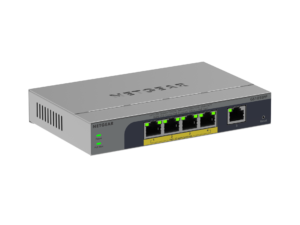
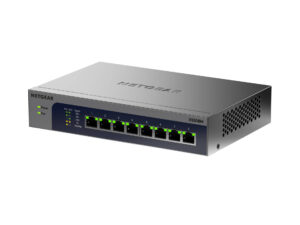
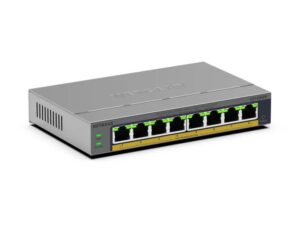
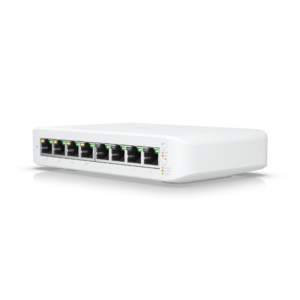
Network Switches with similar specs to the TRENDnet TPE-BG350

Ratings & reviews
No reviews yet. Be the first to share your experience.
The bottom line
The TRENDnet TPE-BG350 earns a VS Score of 39, below the median of the 17 network switches it is measured against (a score of 50 is level with that median).
- Who it’s for
- Someone running one or two 802.3bt devices that need far more than PoE+ can give, over 2.5G links, from a quiet closet and with nothing to configure.
- Who should look elsewhere
- Anyone who needs to assign VLANs or schedule PoE (it is unmanaged), more than four powered ports, or a 10G uplink to carry several fast devices back to the network.
- The trade-off that matters
- Every port, uplink included, stops at 2.5G, so four fast access points share one 2.5G path to the router however much power each one gets.
- The main alternative
- Ubiquiti USW Flex 2.5G 8 PoE: twice the powered ports, a 10G uplink and VLANs through UniFi, if a controller is acceptable and the power adapter is bought separately.
The VS Score is calculated from the weighted specifications above, each measured against the median of comparable network switches — a shortlisting guide, not a substitute for your own priorities. See how we score.