No current price: no retailer we track lists it right now.
18 facts in comparison
Ubiquiti U7 Pro XG vs TP-Link Omada Flex Bridge 5
These two share a category label and almost nothing else, and the comparison earns its place by making that clear before someone buys the wrong one.
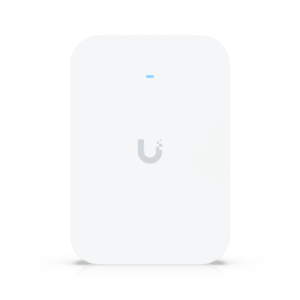
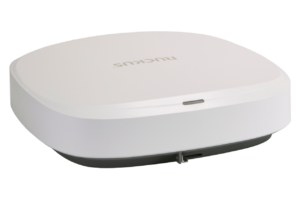
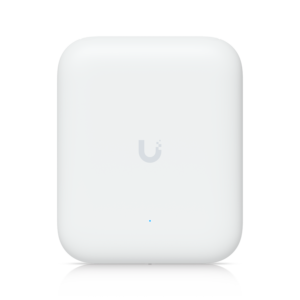
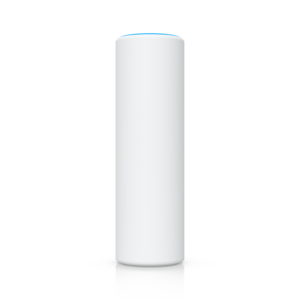
The Ubiquiti U7 Pro XG is a ceiling-mounted Wi-Fi 7 access point with a 10 Gigabit uplink, tri-band radios including 6 GHz, and a wireless class in the ten-gigabit range. It exists to serve a room or a floor full of devices at the highest speed current clients can reach, and it does so as part of a UniFi network: it needs a controller, it needs PoE+, and it does not run standalone.
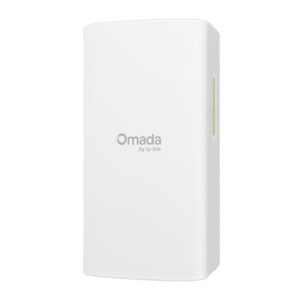
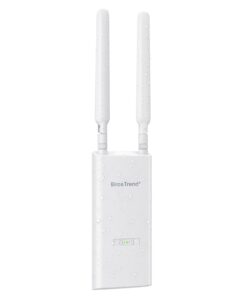
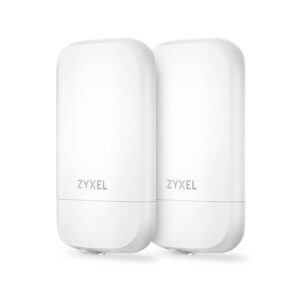
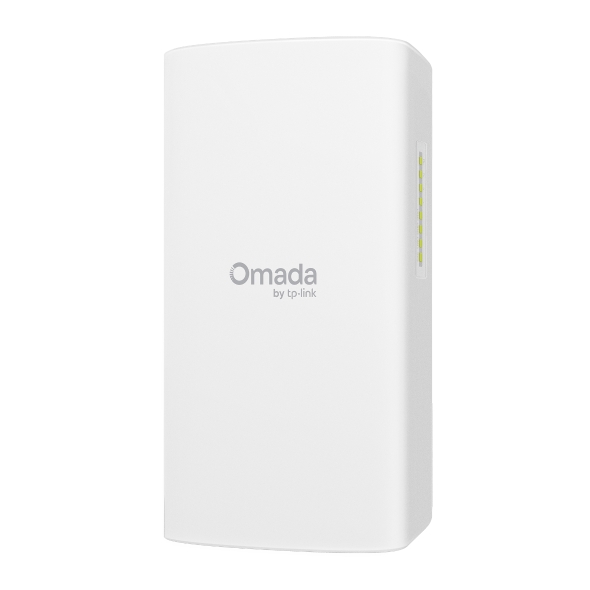
The TP-Link Omada Flex Bridge 5 is an outdoor point-to-point link. It is a Wi-Fi 5 radio with a gigabit port, rated for the weather, powered by PoE or a DC adapter, and able to run on its own without a controller. Its job is to connect two buildings, a garden office, a barn or a camera pole back to the main network across open air. It is not meant to serve laptops in a room, and it would do that badly.
So the rows below are not a contest. The Ubiquiti's twelve-times-higher wireless class is a real number, and irrelevant to a bridge that carries one link across a field; the TP-Link's outdoor rating and standalone mode are real advantages, and irrelevant to an access point on an office ceiling.
The decision is the job. Indoor Wi-Fi 7 coverage for many devices, on a UniFi network with 10 Gigabit switching to feed it: the U7 Pro XG, and nothing else in this pairing. A wireless link between two structures, weatherproof, cheap and simple: the Flex Bridge, and the U7 is not even an option.
Editor’s note
Judged on its own job, the U7 Pro XG is unusually well balanced. The fast uplink is what gives its top band somewhere to go, and proper 802.11k, v and r roaming is what makes several of them behave like one network. The compromises are in the fine print: the radios are two-stream, so it is built for many devices at once rather than one record-breaking laptop, and there is no injector in the box and no DC jack. Hung off a gigabit switch, it strands the very feature it is sold on.
The Flex Bridge is equally good at its narrow task and easy to misread. One box is half a link; a working connection needs two, or several pointed at a sector hub. Each unit can also power cameras from its own ports, which folds a gate or barn camera into one cable run, and DIP-switch pairing keeps setup simple. Its rated range assumes clean line of sight, so trees and rooftops in the path matter more than distance.
The Ubiquiti is wrong for anyone without a UniFi controller and multi-gig switching; the TP-Link is wrong for anyone who pictured it as outdoor Wi-Fi for phones in the garden.
Head-to-head points: every spec is scaled between these products only, so a product can score high here and modestly on its own page, where the VS Score measures it against the median of its class.
Where the Ubiquiti U7 Pro XG beats the TP-Link Omada Flex Bridge 5
- Wi-Fi 7 Wi-Fi standard ?Wi-Fi 7 vs Wi-Fi 5
- A much higher max wireless speed ?10,788 Mbps vs 867 Mbps
- Has 6 GHz band ?
- A much higher ethernet port speed ?10 Gbps vs 1 Gbps
- Has ceiling mountable ?
Where the TP-Link Omada Flex Bridge 5 beats the Ubiquiti U7 Pro XG
- Has DC power option ?
- Has standalone mode ?
- Has outdoor rated ?
- A lighter build ?590 g vs 750 g
Key real-world differences
The spec sheet pulls in both directions. These are the gaps big enough to shape the decision — with the actual figures, and what each one means in real-world use.
- Wi-Fi standardWirelessWi-Fi 7 vs Wi-Fi 5 — advantage Ubiquiti U7 Pro XG
The Wi-Fi generation supported; later is faster and handles more devices.
- Max wireless speedWireless10,788 Mbps vs 867 Mbps — 12.4× more for the Ubiquiti U7 Pro XG
The combined theoretical throughput across all bands.
- Ethernet port speedPorts & power10 Gbps vs 1 Gbps — 10× more for the Ubiquiti U7 Pro XG
The uplink port speed; multi-gig keeps Wi-Fi 6E/7 from bottlenecking.
- Standalone modeManagementNo vs Yes — only the TP-Link Omada Flex Bridge 5 has it
Works on its own without a controller.
- Ceiling mountableDesignYes vs No — only the Ubiquiti U7 Pro XG has it
Mounts flat on a ceiling for the best coverage pattern.
Which one should you buy?
There is no single answer — it depends on what you will actually use it for. Match your priority to the pick below.
- Best for wireless Ubiquiti U7 Pro XG takes the category 100 to 10 — driven by Wi-Fi standard (Wi-Fi 7 vs Wi-Fi 5).
- Best for management TP-Link Omada Flex Bridge 5 takes the category 100 to 72 — driven by standalone mode (No vs Yes).
- Best for ports & power Ubiquiti U7 Pro XG takes the category 91 to 55 — driven by ethernet port speed (10 Gbps vs 1 Gbps).
- Best for design TP-Link Omada Flex Bridge 5 takes the category 63 to 37 — driven by outdoor rated (No vs Yes).
- Top overall score Ubiquiti U7 Pro XG tops the overall VS Score at 87 while winning 2 of 4 categories outright.
Where each one falls short
Ubiquiti U7 Pro XG
- Standalone mode: No vs Yes
- Outdoor rated: No vs Yes
- DC power option: No vs Yes
TP-Link Omada Flex Bridge 5
- Wi-Fi standard: Wi-Fi 7 vs Wi-Fi 5
- Max wireless speed: 10,788 Mbps vs 867 Mbps
- Ethernet port speed: 10 Gbps vs 1 Gbps
- 4 specs are unreported (shown as Unknown) and excluded from its scores.
What matters to you?
Drag the sliders to weight each category and re-rank the products to suit your priorities.
Score breakdown
Wireless
Ports & power
Management
Design
Specs last verified October 11, 2026Ubiquiti U7 Pro XG: 18 of 18 specs verified (100%)TP-Link Omada Flex Bridge 5: 14 of 18 specs verified (78%)Unverified specs show as Unknown — never estimated, never scored
What reviewers say
The bottom line
Nobody should be choosing between these two, but one property might need both. A house with a detached office or workshop can use a pair of Flex Bridges to carry the network across the yard and then put an access point inside the far building for Wi-Fi. On a UniFi site that access point could be a Ubiquiti, though a gigabit-class link would waste the U7 Pro XG's uplink, so a cheaper model makes more sense at the far end.
The decision is therefore about the gap being closed. Walls and floors inside one building, many clients, a controller and multi-gig switching already in place: the U7 Pro XG. Open air between two structures with a clear line of sight: the Flex Bridge, bought as a pair.
Mix the jobs up and neither product can rescue the purchase.