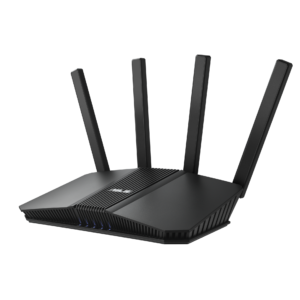
ASUS has cleared the hurdle that has hung over foreign-made routers in the United States since March. On September 9, 2026, the FCC announced that the Department of War had granted ASUS FCC conditional approval. It covers a long list of ASUS networking families, from RT routers to ZenWiFi mesh kits. The approval runs until March 6, 2028. For people who already own an ASUS router, very little changes. The bigger effect falls on models ASUS has not launched yet, including its first Wi-Fi 8 hardware. This guide explains what the approval covers, what the end date really controls, and how ASUS now compares with brands that are still waiting.
What the ASUS FCC conditional approval covers
The notice came from the FCC's Public Safety and Homeland Security Bureau. It confirms that the Department of War reviewed submissions and granted conditional approvals to three companies. ASUS was the largest name on the list. Comtrend received approval for four wireless routers, and Husqvarna for four robotic lawn mower platforms.
The ASUS entry names product families rather than single models. It covers:
- the RT Router Series
- the ROG GT Series
- the ROG Strix GS Series
- the TUF Gaming Series
- the ExpertWiFi Series
- the ZenWiFi Mesh Series
- the 5G MiFi Series
- repeaters and wireless access points
The FCC treats each approval as a specific finding that those devices do not pose a risk to US national security. So it updated its Covered List to exclude them. Both the ASUS and the Comtrend approvals end on March 6, 2028.
Why a router needs this approval at all
On March 23, 2026, the FCC added routers produced in a foreign country to its Covered List. The rule looks at where a router is made, not at who owns the brand. The FCC counts any major stage of production, including manufacturing, assembly, design and development. So a router designed in one country and built in another still counts as foreign-produced.
Covered equipment cannot get a new FCC equipment authorization. Without that authorization, a new model cannot be imported, marketed or sold in the United States. Models that already carried an FCC ID before the change can still be sold and used. Our explainer on the FCC foreign-made router ban walks through those basics in more detail.
Conditional approval is the way out of that restriction. A company sends the information that the government's guidance asks for, and the FCC forwards it to the Department of War and the Department of Homeland Security. If either agency finds no unacceptable risk, the approved devices can go through FCC authorization again.
What the March 6, 2028 end date actually controls
The end date is easy to misread. It does not mean ASUS routers vanish from shelves in 2028. The FCC's own FAQ answers this directly. Once an approval ends, the devices it covered can no longer receive new FCC equipment authorization. But a device that was authorized during the approval window can still be imported, marketed and sold after that date.
In practice, that gives ASUS a window of roughly 18 months to certify new hardware. A model that gets its FCC authorization before March 6, 2028 can stay on sale afterwards. A model that misses the window would need another approval before it could launch in the United States. Neither the notice nor the FCC's router FAQ says how a renewal would work.
The date also says nothing about security testing. The approval is a national security decision about supply chain risk. It is not a review of the firmware on your router, and it does not replace normal patching.
What changes for people who already own an ASUS router
Nothing, in the short term. The Covered List never restricted routers that people had already bought, and the FCC says owners do not need to take any action. Your router keeps working, and you can keep using it.
Firmware updates were not cut off either. When routers joined the Covered List, the FCC waived its limits on software and firmware changes for routers that were already authorized. Then, on May 8, 2026, it extended that waiver until at least January 1, 2029, and widened it to cover Class II changes. The approval goes further for the listed ASUS families, because approved devices sit outside the Covered List altogether.
Still, a waiver or an approval only allows updates. It does not promise them. How long a model keeps getting patches depends on ASUS's own support decisions for that model. For the ASUS RT-BE92U, for example, our listing found no published end-of-support date. So check the ASUS support page before you plan around many years of updates.
What it means for the next ASUS routers, including Wi-Fi 8
The approval matters most for hardware that is not on sale yet. Every new router model needs its own FCC authorization before it can reach American stores. Without an approval, ASUS could have kept selling its existing catalogue but could not have replaced it.
That is especially relevant for Wi-Fi 8. ASUS unveiled the ROG Rapture GT-BN98 Pro at Computex 2026 in June and called it its first Wi-Fi 8 gaming router. By its name, it belongs to the ROG GT family that the approval lists. Even so, the notice names families rather than models, and it does not mention the GT-BN98 Pro. Whether the router already holds an FCC authorization, and when it will reach US stores, is still unclear. I cannot confirm this.
Early Wi-Fi 8 routers are also built to a draft of the IEEE 802.11bn standard, which is not final yet. So the approval removes a regulatory obstacle, but it does not settle the timing question. Our guide on whether to buy a Wi-Fi 7 router now or wait for Wi-Fi 8 covers that decision.
Where ASUS now stands against other router brands
ASUS joins a growing list. Netgear received approval on April 14, 2026, for its Nighthawk and Orbi routers, cable gateways and cable modems, running to October 1, 2027. Amazon's eero line followed on April 22, with an end date of October 31, 2027. SpaceX's Starlink routers were approved on July 27, 2026, until January 17, 2028. Several gateway makers that supply internet providers, including Sagemcom, Arcadyan and Hitron, are also on the list.
TP-Link does not appear on the FCC's conditional approval list as of its September 9 update. Neither do GL.iNet and Linksys. That does not make their current routers illegal. Models with an existing FCC ID can still be sold, and they can still receive firmware under the waiver. The difference shows up with new models, because a foreign-produced router without an approval cannot receive a new FCC authorization.
That gap can shape an ordinary buying decision. Take our TP-Link Archer BE550 vs ASUS RT-BE92U comparison. Both are tri-band Wi-Fi 7 routers already on sale, so either one is a legal purchase today. The approval does not make the ASUS model better hardware. It only means ASUS has a confirmed path to certify its successors, while TP-Link does not have one yet.
How to check a router before you buy
A few quick checks cover most of what this rule changes:
- Find the FCC ID. It appears on the label or in the documentation, and you can search it in the FCC's equipment authorization database. A model with a valid FCC ID is authorized, whatever happens to its brand later.
- Match the family name. An ASUS model from the RT, ROG GT, ROG Strix GS, TUF Gaming, ExpertWiFi or ZenWiFi lines sits in a family the notice names. For anything outside those names, ask ASUS directly.
- Check support, not only approval. The approval says nothing about how long a model will receive security patches.
- Skip the panic buying. Existing authorized routers are not leaving the market because of this rule, so there is no regulatory reason to rush.
The short version
The ASUS FCC conditional approval secures the brand's path to certify new routers in the United States until March 6, 2028. Models certified before then can stay on sale afterwards. Owners of current ASUS routers do not need to do anything. For buyers, the approval is a useful signal about future product availability, not a verdict on security. So choose a router on its features, its support record and its price, then use the FCC ID to confirm that it is authorized.