
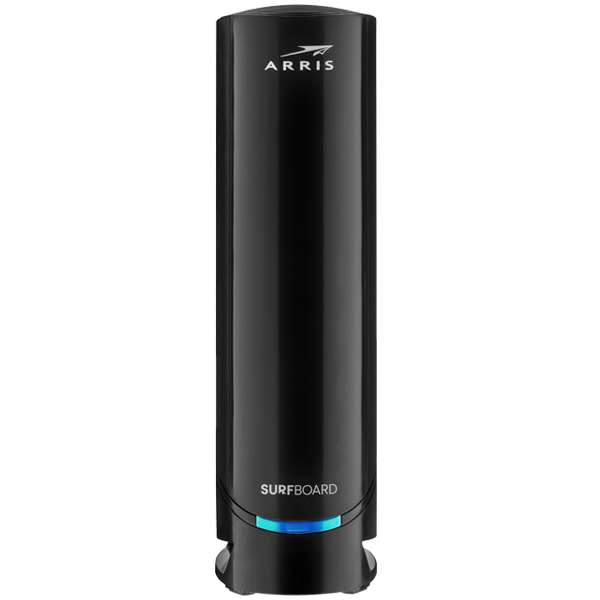
ARRIS SURFboard G20: Specs, Features, Pros & Cons
The feature that separates this model from the SURFboard G18 is invisible on a shelf: a switchable upstream filter, which lets it use the expanded upload tiers cable providers have been rolling out. The G18 physically cannot do that, so if your provider has been advertising improved upload speeds, this filter is precisely the reason to choose the G20.
Upload has been the neglected half of cable internet for years, and it is the half that video calls, cloud backup and large file transfers lean on. A modem that cannot use a newly widened upstream leaves that improvement on the table no matter how good its download figures look.
The rest is a sensible middle package: DOCSIS 3.1, a dual-band Wi-Fi 6 router built in, two Ethernet ports, and a download rating around a gigabit. There is no multi-gig port, so a plan faster than a gigabit will not be fully carried.
As with every cable modem, certification is the gate. Providers authorize devices individually and an unlisted model will not activate, so confirm yours appears on the list before buying. There are no telephone ports for a bundled voice line.
Read against the G18, the decision is straightforward and does not depend on taste: if your provider offers the wider upstream, this is the one to buy, and if it does not, the filter is a switch you will never flip. Few specification differences between two sibling modems are as close to a yes or no question.
Category strengths
Where the ARRIS SURFboard G20 trails the median
- A much lower max download speed ?1,000 Mbps vs 2,500 Mbps (median)
- No Multi-gig Ethernet ?
How this VS Score was computed
Score 40: each known spec is measured against the median of all modems (6 products), then weighted; 50 means level with that median. In classes of six or more, a value beyond the class’s 10th–90th percentile range counts as that limit, so one extreme product cannot set the scale. 82% of the scoreable weight could be used; unknown values, features not applicable to this class and proxies (battery capacity where a rated life exists) add or remove nothing.
| Specification | This product | Cohort median | Score weight | Points moved |
|---|---|---|---|---|
| Max download speed | 1,000 | 2,500 | 2 | −60.0 |
| Multi-gig Ethernet | No | 67% of the class have it | 0.8 | −38.4 |
| Built-in Wi-Fi router | Yes | 67% of the class have it | 0.5 | +25.0 |
| DOCSIS version | DOCSIS 3.1 | DOCSIS 3.1 | 2 | +0.0 |
| Downstream channels | 32 | 32 | 0.8 | +0.0 |
| Upstream channels | 8 | 8 | 0.5 | +0.0 |
| Ethernet ports | 2 | 2 | 0.8 | +0.0 |
| Voice / telephony ports | 0 | 0 | 0.2 | +0.0 |
Not scored: Max upload speed (unknown: not scored); Link aggregation (unknown: not scored); Weight (unknown: not scored); Fanless (unknown: not scored).
Editor’s note
The SURFboard G20 exists because cable upload speeds finally started moving. Its headline feature is a switchable upstream diplexer (5-42 or 5-85 MHz) that lets it ride the mid-split upload tiers Xfinity and others are rolling out, the exact thing its sibling, the ARRIS SURFboard G18, physically cannot do. If phrases like "boosted upload" have appeared in your ISP's emails, that filter is the part of the spec sheet to read first.
The rest is a sensible mid-tier package: DOCSIS 3.1 certified for Xfinity, Spectrum and Cox, dual-band Wi-Fi 6 rated AX3000, two gigabit Ethernet ports, WPA3, guest network, and setup through the SURFboard Central app with a proper web interface behind it. No subscriptions anywhere.
ARRIS's paperwork disagrees with itself on upload. The current datasheet says "upstream speeds up to 525 Mbps" on one page and "up to 100 Mbps" on another, and the launch press release said 100. The download guidance is consistent, at plans up to a gigabit.
There are only two LAN ports and nothing multi-gig, so a wired household needs a switch, and there are no phone ports. It is cable-only with no Ethernet-WAN fallback, so unlike the SURFboard G54 it doesn't survive a move to fiber. The coverage claim (1,250 sq ft on ARRIS's spec table) suits apartments and modest homes.
Anyone who changes gear often is better served by separates, because a combo ages as one unit.
Specifications
Quality bars show where each figure sits between the lowest and highest of the 6 modems this VS Score is measured against.
Performance
Connectivity
Features
Design
Networking assessment
What the specification table does not say on its own: what this device needs to connect, what speeds are realistic, what costs extra, and where it falls short. Every statement below is read from the verified sheet or written by an editor — nothing is estimated.
Test environment
Research-based assessment: this brief is derived from the manufacturer’s published specifications for the ARRIS SURFboard G20 and the documents listed under Sources and verification. We have not run this unit on our own network, so nothing here is a measurement of ours.
Connection requirements
Needs a cable internet provider whose network supports DOCSIS 3.1; a modem is only usable once the provider has approved that model, so check their compatibility list before buying.
Listed provider compatibility: Certified for Xfinity, Spectrum and Cox; works with other major US cable ISPs.
It includes a Wi-Fi router, so no separate router is required for a basic setup.
Throughput expectations
The DOCSIS link is rated for 1,000 Mbps down and an unspecified rate up; your plan speed, not the modem, is the practical ceiling.
Security support
Security-update cadence is not something manufacturers publish as a specification; see Support and updates below.
Known limitations
Not offered, according to the spec sheet: multi-gig Ethernet.
4 specifications are not published by the manufacturer and are shown as Unknown rather than guessed.
Support and updates
We have not found a published firmware support-lifetime commitment for this model. Update policies differ widely between brands; check the support page linked under Sources and verification before relying on it for a long deployment, and treat a device that has stopped receiving security updates as due for replacement.
Sources and verification
Where the specifications come from
- Official product pagesurfboard.com
- Datasheet or manualarris.my.salesforce.com
- Independent testingrtings.com
Verification
- First published
- Specifications last checked
- Sheet completeness
- 9 of 13 specifications verified; the rest show as Unknown and are never estimated or scored
- Page type
- Product specification page — Compiled from the manufacturer’s published specifications and the cited sources; this is not a hands-on test.
- Basis
- Research-based: specifications and editorial text were compiled from the documents listed here and the manufacturer’s published data. We have not tested this unit ourselves; where independent measurements are mentioned they belong to the linked publication.
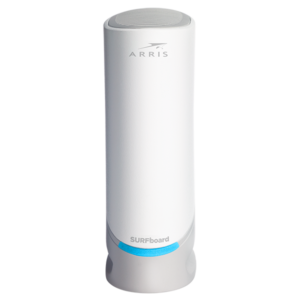
Modems with similar specs to the ARRIS SURFboard G20
Ratings & reviews
No reviews yet. Be the first to share your experience.
The bottom line
The ARRIS SURFboard G20 earns a VS Score of 40, below the median of the 6 modems it is measured against (a score of 50 is level with that median).
- Who it’s for
- Cable customers on gigabit-or-slower plans whose ISP offers (or will offer) boosted upload tiers, which the switchable mid-split diplexer is built for, and who want one subscription-free box with app setup and a real web interface.
- Who should look elsewhere
- Multi-gig plans and wired-heavy homes (two gigabit LAN ports, no multi-gig), voice-plan customers (no phone ports), and anyone who might switch to fiber, since unlike the G54 it has no Ethernet-WAN fallback.
- The trade-off that matters
- The upstream headroom you choose it for has no settled ceiling, because ARRIS's datasheet gives two different upload figures. The diplexer advantage is real, but the number attached to it is murky.
- The main alternative
- ARRIS SURFboard G18: if your uploads are ordinary and will stay that way, it does the same core job with AX1800 Wi-Fi and the older fixed upload split.
The VS Score is calculated from the weighted specifications above, each measured against the median of comparable modems — a shortlisting guide, not a substitute for your own priorities. See how we score.