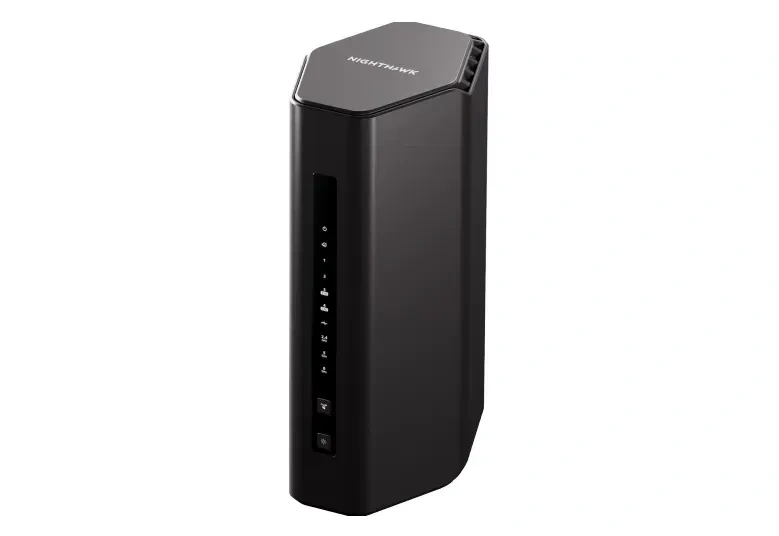
NETGEAR Nighthawk RS300: Specs, Price, Pros & Cons
The four LAN ports on the RS300 run at two speeds, and the LED table in NETGEAR's user manual spells it out: ports 1 and 2 are gigabit, ports 3 and 4 run at 2.5 Gbps. Add the internet port, which runs at the same multi-gig speed, plus USB 3.0, and three of the five network sockets clear the gigabit line.
Both kinds of link aggregation are in the firmware. LAN ports 1 and 2 can be bonded to a switch or NAS that speaks 802.3ad LACP or a static LAG, and the internet port can be paired with LAN port 4 when a cable modem supports aggregation but has no multi-gig port of its own.
The radios are tri-band Wi-Fi 7 at two streams per band. The manual rounds them to 0.7 Gbps on 2.4 GHz, 2.9 Gbps on 5 GHz with 160 MHz channels and 5.8 Gbps on 6 GHz with 320 MHz channels, and NETGEAR quotes the total as 9.3 Gbps. NETGEAR's footnote adds that the 6 GHz band is limited to indoor range and needs clients that support it, and the technical sheet names uplink and downlink MU-MIMO and OFDMA.
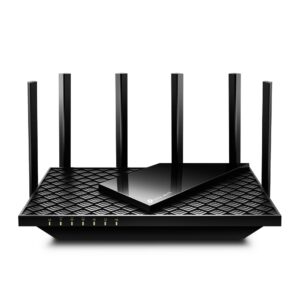
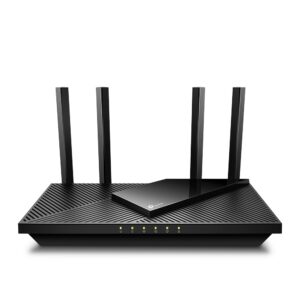
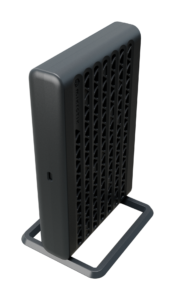
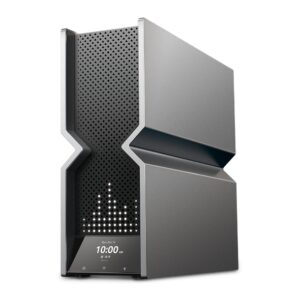
Four internal antennas and a quad-core 2.0 GHz chip sit in a 249 by 150 by 102 mm body that weighs 0.95 kg, so it wants a shelf of its own. NETGEAR rates the router for 2,500 sq ft and up to 100 devices. Separate main, IoT and guest networks and remote VPN access are built into the firmware, and setup happens in the Nighthawk app. The web interface can also block sites by keyword on a schedule, but the manual notes that keyword blocking works only on addresses that begin with http://, not on https:// ones.
Category strengths
Where the NETGEAR Nighthawk RS300 beats the median
- Has 6 GHz band ?
- A higher max wireless speed ?9,300 Mbps vs 6,452 Mbps (median)
- More frequency bands ?3 vs 2 (median)
- A higher coverage area ?2,500 sq ft vs 2,000 sq ft (median)
- A higher processor speed ?2 GHz vs 1.5 GHz (median)
Where the NETGEAR Nighthawk RS300 trails the median
- No security suite, no subscription ?
- Fewer max connected devices ?100 vs 164 (median)
- A heavier build ?950 g vs 761 g (median)
How this VS Score was computed
Score 61: each known spec is measured against the median of all wi-fi routers (28 products), then weighted. 66% of the scoreable weight could be used. See how we score
| Specification | This product | Cohort median | Score weight | Points moved |
|---|---|---|---|---|
| 6 GHz band | Yes | 48% of the class have it | 1 | +50.0 |
| Max wireless speed | 9,300 | 6,452 | 2 | +44.0 |
| Multi-gig LAN | Yes | 64% of the class have it | 0.8 | +40.0 |
| Frequency bands | 3 | 2 | 1 | +25.0 |
| Security suite, no subscription | No | 50% of the class have it | 0.5 | −24.0 |
| Coverage area | 2,500 | 2,000 | 1.5 | +19.5 |
| Max connected devices | 100 | 164 | 0.5 | −10.0 |
| Processor speed | 2 | 1.5 | 0.5 | +8.5 |
| Weight | 950 | 761 | 0.2 | −2.0 |
| Wi-Fi standard | Wi-Fi 7 | Wi-Fi 7 | 2 | +0.0 |
| WAN port speed | 2.5 | 2.5 | 1.5 | +0.0 |
| LAN ports | 4 | 4 | 1 | +0.0 |
| USB ports | 1 | 1 | 0.3 | +0.0 |
| Processor cores | 4 | 4 | 0.5 | +0.0 |
Not scored: MU-MIMO (standard for the class (100% have it)); OFDMA (standard for the class (100% have it)); Beamforming (unknown: not scored); Link aggregation (standard for the class (80% have it)); RAM (unknown: not scored); WPA3 (standard for the class (100% have it)); Mesh support (unknown: not scored); Guest network (standard for the class (100% have it)); Parental controls (unknown: not scored); Quality of Service (QoS) (unknown: not scored); VPN server (standard for the class (100% have it)); App control (standard for the class (100% have it)); Wall-mountable (unknown: not scored).
Editor’s note
With one NAS and one fast desktop, the RS300's two quick LAN ports are enough, and the gigabit pair can still be bonded into a doubled link for a switch that speaks LACP. A third fast machine starts to cost something, and a home lab will hit that limit on the first day.
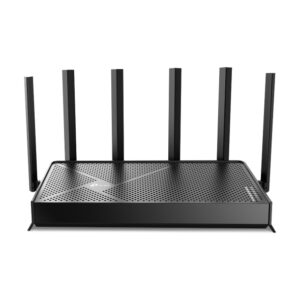
TP-Link's Archer BE550 sits in the same tri-band class, with two streams per band and a multi-gig internet port, and runs all four LAN ports at multi-gig speed, so a NAS, a workstation and a wired access point can each move more than a gigabit at once.
The 6 GHz rate depends on a client that supports Wi-Fi 7's widest channel. A two-stream Wi-Fi 6E laptop links at less than half of it, because it cannot use that width, so the band's headline speed belongs to Wi-Fi 7 phones and laptops.
Armor is the other line item. The technical sheet describes NETGEAR's Bitdefender service as an optional subscription, and the router's own protection is the firewall, WPA3 and access control. Threat blocking costs extra on the TP-Link as well, where intrusion prevention sits in HomeShield's paid tier.
Specifications
Wireless
Ports & wired
Hardware
Features & security
Design
Networking assessment
Connection requirements
The WAN (internet) port is rated at 2.5 Gbps. An internet plan faster than that is capped at the router, and nothing on the network can download faster than this port regardless of the wireless figures.
There are 4 LAN ports, at least one of them multi-gig, so one wired device can run above Gigabit speed.
Throughput expectations
The Wi-Fi 7 headline of 9,300 Mbps adds together the theoretical peak of every band. A single device connects to one band at a time, so no client ever sees the total, and real-world speeds run well below the link rate even in the same room.
The 6 GHz band is only usable by Wi-Fi 6E or Wi-Fi 7 clients and has noticeably shorter range through walls; older devices stay on the 5 GHz and 2.4 GHz bands.
OFDMA and MU-MIMO help most when many devices are active at once; they do not make a single download faster.
Firmware and subscriptions
Version 1.2.7.2, posted June 1, 2026, is the newest of ten RS300 releases on NETGEAR's support site, with a Wi-Fi stability patch, a QoS change to stop a memory leak and fixes for app onboarding and the IoT network. The technical sheet says the router supports automatic firmware updates, and NETGEAR's release articles link to the manual for manual installs.
Set-up and management run through the manufacturer’s app; check whether a local web interface is offered as well.
VPN support is built in, which avoids a subscription to a third-party VPN router service for remote access.
Security support
WPA3 is supported, the current Wi-Fi encryption standard; devices that only speak WPA2 still connect in mixed mode.
A guest network is available for visitors and smart-home devices, keeping them off the network your computers use.
Security-update cadence is not something manufacturers publish as a specification; see Support and updates below.
Real-world household suitability
The manufacturer rates coverage at 2,500 sq ft. That figure assumes open space; brick, concrete and floors reduce it, and a large or multi-storey home is usually better served by a mesh system than by one router.
Rated for 100 connected devices — a marketing figure, but a useful indication of whether a home full of smart plugs, cameras and phones is within its design.
Known limitations
Not offered, according to the spec sheet: security suite, no subscription.
6 specifications are not published by the manufacturer and are shown as Unknown rather than guessed.
Support and updates
The user manual covers the RS300 together with the RS280 and a BE9300 model, so check that a page applies to the RS300 before following it. Armor is an optional paid service activated from the Nighthawk app, and the technical sheet sends owners to netgear.com/eos for the end date of software and security updates.
Sources and verification
Where the specifications come from
- Official product pagenetgear.com
Verification
- First published
- Specifications last checked
- Sheet completeness
- 22 of 28 specifications verified; the rest show as Unknown and are never estimated or scored
- Page type
- Product specification page — Compiled from the manufacturer’s published specifications and the cited sources; this is not a hands-on test.
- Basis
- Research-based: specifications and editorial text were compiled from the documents listed here and the manufacturer’s published data. We have not tested this unit ourselves; where independent measurements are mentioned they belong to the linked publication.
Where to buy
Prices and availability may change. Check the retailer before buying. We may earn a commission on purchases.
Price history
Wi-Fi Routers with similar specs to the NETGEAR Nighthawk RS300
Ratings & reviews
No reviews yet. Write the first one
The bottom line
The NETGEAR Nighthawk RS300 earns a VS Score of 61, above the median of the 28 wi-fi routers it is measured against (a score of 50 is level with that median).
- Who it’s for
- A home with a multi-gig plan, one or two fast wired devices such as a NAS or a desktop, and Wi-Fi 7 phones or laptops that can use the 6 GHz band.
- Who should look elsewhere
- A home lab or any setup with three or more wired machines that need more than a gigabit, and anyone who wants threat protection without a subscription.
- The trade-off that matters
- Half the LAN ports are gigabit, so the RS300 is fast for two wired devices and ordinary for the rest, which is the line between it and the all-multi-gig routers of its class.
- The main alternative
- TP-Link Archer BE550: the same tri-band class with every LAN port at multi-gig speed and a USB 3.0 port.
This page was created with the help of AI. How we work