If your internet came with a gateway from AT&T, Xfinity, CenturyLink or Frontier, check the model number on its label. A flaw called WPSplinter lets someone within Wi-Fi range take over certain Broadcom-based gateways without knowing the Wi-Fi password. Changing that password doesn’t help, and switching off WPS may not either.
Security researcher Quentin Kaiser disclosed it on October 16 in Paris. His list of affected devices includes gateways that US providers hand out, among them AT&T’s BGW210-700 and BGW320-505. The fix has to come from your provider. Until it does, a call to support helps, and so does a modem with no Wi-Fi if you have cable service.
An attack that needs no password
WPS is the push-button pairing feature on many routers. Older Broadcom-based gateways run it through a program called WPS Monitor. That program receives some WPS messages in pieces and joins them without checking that they fit the space set aside for them.
Someone nearby can send crafted Wi-Fi frames that overflow that space. No password and no completed pairing are needed. Kaiser showed the attack reading memory and running his own code on gateways from three Belgian providers. In one demo, his code pulled the Wi-Fi password out of the gateway and sent it back to him over the air.
He says the attack works over long distances, not only with the antennas side by side. As of October 15, none of the gateways he tested had been patched.
The bug has been in Broadcom’s software since at least 2010, according to Kaiser. Broadcom told him it replaced WPS Monitor in 2018 with hostapd, a widely used open-source Wi-Fi program, in a newer version of its software kit. Gateways that never moved to that version still carry the old code.
On the oldest chips in scope, which run an operating system called eCos, there is no newer kit to move to. Kaiser calls those a forever day, a flaw that will never be fixed. Broadcom declined to request a CVE number, calling the software obsolete and outside its support window.
US gateways on Kaiser’s list
Kaiser’s public device list records which provider ships each affected model. These are the US providers on it:
- AT&T: the BGW210-700, BGW320-505, NVG589 and NVG599
- Xfinity: the ARRIS X5001, listed as an XF3 gateway
- CenturyLink: 13 models from Actiontec, Zyxel, Technicolor and Adtran, among them the C3000A, C3000Z and C424G
- Frontier: the Actiontec F2250
The BGW210-700 entry names 26 firmware versions, up to 2.17.5. A long run of firmware updates hasn’t taken that model off the list.
Kaiser notes that hardware and firmware can differ within one model, and he calls the list incomplete. A gateway that is missing from it isn’t proof of anything.
Store-bought routers on it too
Equipment sold in US stores appears as well, mostly models that are several years old. The list includes the TP-Link Archer C3150 V2 with US firmware and an entry it calls the ARRIS SURFboard AC1200. Netgear’s WNR3500L is on it, and so are Netgear DSL modem routers with North American firmware.
Tenda’s US versions of its D151, D301 and V1200 DSL routers appear too. So do Cisco’s small-business RV routers and WAP access points.
The WPS switch and the 2018 patch
Kaiser tells owners not to assume the WPS switch in the settings fixes the problem. On some firmware, turning WPS off may leave the vulnerable program running.
A firmware dated after 2018 isn’t proof either. On October 23, Kaiser published a reconstruction of what he believes is Broadcom’s 2018 patch, based on leaked source code.
He found that the added checks can still be bypassed on some 32-bit ARM builds, depending on the system library the gateway maker used. His advice to makers is to move to hostapd and stop testing whether the old patch holds.
A new Wi-Fi password changes nothing, because the attack happens before any login. In his demo, the password was what the attacker took.
What you can do about a provider’s gateway
You can’t install a fix on a provider’s gateway yourself, because the provider controls its firmware. Contact support, give the model from the label and ask whether its firmware addresses WPSplinter. Use that name, since there is no CVE number for the agent to look up.
On October 20, Kaiser reported that the Belgian provider Proximus had switched WPS off across its fleet over the previous 24 hours. Full patching was to follow in the coming weeks, which shows how much a provider can do remotely once it decides to.
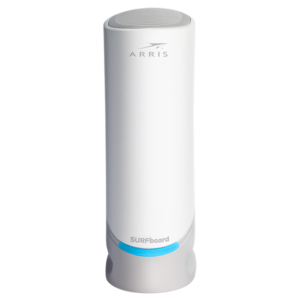
Cable customers can take the provider’s gateway out of the picture. The attack arrives over the gateway’s own Wi-Fi. A modem with no Wi-Fi radio, such as the ARRIS SURFboard S33, gives it nothing to reach. ARRIS lists the S33 as compatible with Xfinity, Spectrum and Cox, and your own router then supplies the Wi-Fi.
The S33 has no phone port. It can’t replace a gateway that also carries your home phone line.
Where you keep the provider’s gateway, see whether its settings let you switch its Wi-Fi off and run your own router behind it. By our reading, that removes the radio the attack uses, but only a firmware update from the provider settles it.
Checking the list again
Kaiser’s WPSplinter page links a community-maintained device list that is updated as owners report models. If your gateway isn’t on it today, look again after your provider answers, and keep the answer in writing.