Ubiquiti USW Aggregation: Specs, Features, Pros & Cons
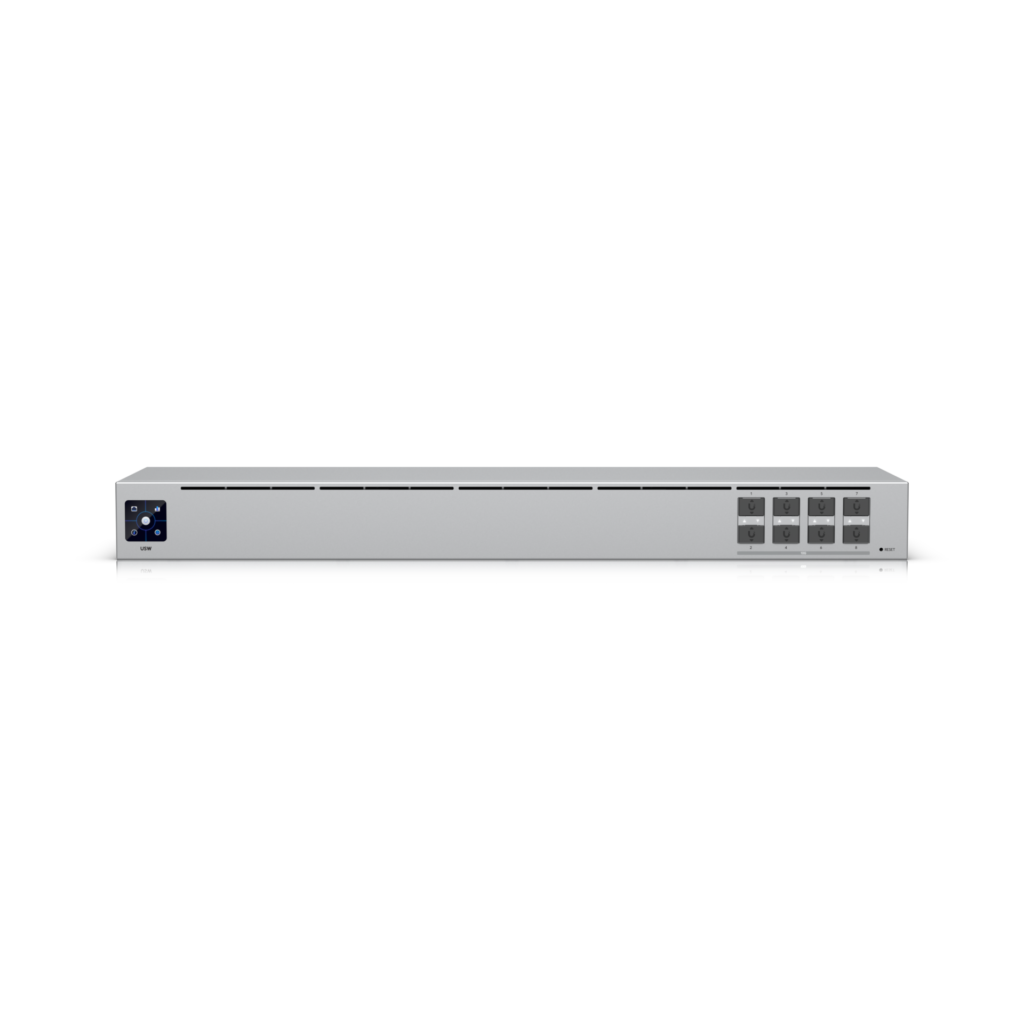
There is no RJ45 port on the USW Aggregation. The front panel holds eight SFP+ cages and a 1.3-inch status touchscreen, so every connection needs a direct-attach cable, a fiber transceiver or an RJ45 module, and none of those come in the box.
Ubiquiti built it as the 10G backbone of a UniFi network, the switch that joins the SFP+ uplinks of several access switches, a NAS with an SFP+ card and the gateway. It is a 1U rack unit only 120 mm deep, in a steel case with an internal power supply, and Ubiquiti's store page describes the cooling as fanless and silent.
The fabric is rated at 160 Gbps and 119 million packets per second, enough for all eight cages at 10G in both directions at once. Configuration happens only in UniFi Network, version 5.14.12 or later, where it gets the full Layer 2 list: up to 1,000 VLANs, LACP, IGMP snooping with a querier, 802.1X, MAC and IP access lists, port isolation, mirroring and jumbo frames.
Each cage runs at 10G or 1G. Ubiquiti's own accessories cover the usual links: a direct-attach cable inside the rack, a multi-mode module for fiber runs up to 400 m, a single-mode module for up to 10 km, and an RJ45 module for copper up to 100 m that also handles 2.5G and 5G devices. Ubiquiti's 36 W maximum for the switch already counts the modules in its cages.
Category strengths
Where the Ubiquiti USW Aggregation beats the median
- A much higher switching capacity ?160 Gbps vs 40 Gbps (median)
- A much higher forwarding rate ?119 Mpps vs 32.73 Mpps (median)
- More SFP/SFP+ ports ?8 vs 0 (median)
- Has rack-mountable ?
- Has cloud management ?
Where the Ubiquiti USW Aggregation trails the median
- Fewer PoE ports ?0 vs 4 (median)
- A higher power consumption ?36 W vs 26.5 W (median)
How this VS Score was computed
Score 66: each known spec is measured against the median of all network switches (17 products), then weighted; 50 means level with that median. In classes of six or more, a value beyond the class’s 10th–90th percentile range counts as that limit, so one extreme product cannot set the scale. 71% of the scoreable weight could be used; unknown values, features not applicable to this class and proxies (battery capacity where a rated life exists) add or remove nothing.
| Specification | This product | Cohort median | Score weight | Points moved |
|---|---|---|---|---|
| Switching capacity | 160 | 40 | 1.5 | +75.0 |
| PoE ports | 0 | 4 | 1.2 | −57.6 |
| Forwarding rate | 119 | 32.73 | 0.8 | +40.0 |
| VLAN support | Yes | 59% of the class have it | 0.8 | +40.0 |
| PoE standard | None | PoE+ (802.3at) | 0.8 | −26.4 |
| SFP/SFP+ ports | 8 — capped at the class’s upper range (2) | 0 | 0.5 | +25.0 |
| Management level | Fully managed | Smart managed | 1 | +25.0 |
| Link aggregation | Yes | 53% of the class have it | 0.5 | +25.0 |
| Cloud management | Yes | 50% of the class have it | 0.4 | +20.0 |
| IGMP snooping | Yes | 60% of the class have it | 0.3 | +15.0 |
| Rack-mountable | Yes | 35% of the class have it | 0.3 | +15.0 |
| Power consumption | 36 | 26.5 | 0.5 | −6.5 |
| Gigabit ports | 0 | 0 | 1.5 | +0.0 |
| 2.5G ports | 0 | 0 | 1 | +0.0 |
| 10G ports | 0 | 0 | 0.8 | +0.0 |
| MAC address table | 16 | 16 | 0.3 | +0.0 |
Not scored: Total ports (unknown: not scored); PoE budget (unknown: not scored); Jumbo frame support (standard for the class (100% have it)); Quality of Service (QoS) (unknown: not scored); Fanless (standard for the class (80% have it)); Metal housing (standard for the class (87% have it)).
Editor’s note
Ubiquiti's tech-spec page lists only Layer 2 features for the Aggregation, with none of the inter-VLAN routing its Pro switches advertise, while the store copy promises basic Layer 3 features. Plan as if the switch does not route. A NAS on one VLAN and the editing machines on another then send every copy through the gateway, and on a Dream Machine SE that path runs at the 3.5 Gbps Ubiquiti quotes for routing with intrusion prevention on. Keeping the NAS and its heaviest clients on the same VLAN keeps that traffic inside the switch.
A UniFi site with two or three Pro switches, each with SFP+ uplinks, plus a gateway with an SFP+ port, gets one silent place for all of them to meet at 10G, and short DAC cables keep the cost of filling the cages down. The shallow chassis also fits wall-mounted cabinets where a full-depth switch would not.
With one access switch and one NAS, a direct SFP+ link between them does the same job without another box. And outside UniFi it has no standalone interface, so it is unusable as a generic 10G switch.
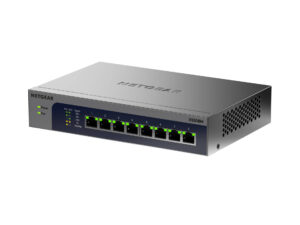
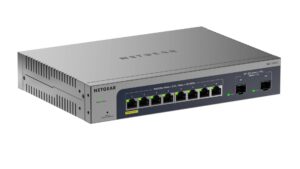
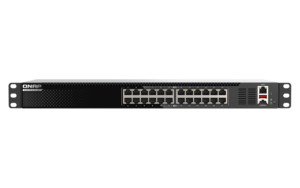
QNAP's QSW-M3224-24T is the copper answer, with 24 10GBASE-T ports, static routing and fans. NETGEAR's XS508Mv2 is the unmanaged one. Before buying the Aggregation, count how many of the devices meant to plug into it have SFP+ ports today.
Specifications
Quality bars show where each figure sits between the lowest and highest of the 17 network switches this VS Score is measured against.
Ports
Power over Ethernet
Performance
Management
Design & power
Networking assessment
What the specification table does not say on its own: what this device needs to connect, what speeds are realistic, what costs extra, and where it falls short. Every statement below is read from the verified sheet or written by an editor — nothing is estimated.
Test environment
Research-based assessment: this brief is derived from the manufacturer’s published specifications for the Ubiquiti USW Aggregation and the documents listed under Sources and verification. We have not run this unit on our own network, so nothing here is a measurement of ours.
Connection requirements
Management level: Fully managed. Expect a web interface or cloud dashboard to configure it, which is where VLANs, link aggregation and QoS are set up.
Throughput expectations
Switching capacity is 160 Gbps, enough for every port to run flat out at once — the usual case for a home or small-office switch.
Jumbo frames are supported, which helps large file transfers between NAS and desktop.
Firmware and subscriptions
Set-up and day-to-day management run through the manufacturer’s cloud service, so that account’s availability and privacy terms are part of the product.
Security support
VLAN support allows work, IoT and guest traffic to be separated on the wired side.
Security-update cadence is not something manufacturers publish as a specification; see Support and updates below.
Known limitations
3 specifications are not published by the manufacturer and are shown as Unknown rather than guessed.
Support and updates
We have not found a published firmware support-lifetime commitment for this model. Update policies differ widely between brands; check the support page linked under Sources and verification before relying on it for a long deployment, and treat a device that has stopped receiving security updates as due for replacement.
Sources and verification
Where the specifications come from
- Official product pagetechspecs.ui.com
Verification
- First published
- Specifications last checked
- Sheet completeness
- 19 of 22 specifications verified; the rest show as Unknown and are never estimated or scored
- Page type
- Product specification page — Compiled from the manufacturer’s published specifications and the cited sources; this is not a hands-on test.
- Basis
- Research-based: specifications and editorial text were compiled from the documents listed here and the manufacturer’s published data. We have not tested this unit ourselves; where independent measurements are mentioned they belong to the linked publication.
Network Switches with similar specs to the Ubiquiti USW Aggregation

Ratings & reviews
No reviews yet. Be the first to share your experience.
The bottom line
The Ubiquiti USW Aggregation earns a VS Score of 66, above the median of the 17 network switches it is measured against (a score of 50 is level with that median).
- Who it’s for
- A UniFi rack where several switches, a NAS and the gateway already have SFP+ ports and need one silent place to meet at 10G.
- Who should look elsewhere
- Anyone without a UniFi controller, anyone whose 10G devices only have RJ45 ports, and anyone who wants the switch itself to route between VLANs.
- The trade-off that matters
- Fanless and shallow by design, but nothing plugs straight in: every link means buying a DAC or a module, and a fiber run needs a transceiver at both ends.
- The main alternative
- NETGEAR XS508Mv2: eight 10G RJ45 ports with nothing to configure, the simpler pick when the 10G devices have copper ports.
The VS Score is calculated from the weighted specifications above, each measured against the median of comparable network switches — a shortlisting guide, not a substitute for your own priorities. See how we score.