Amazon's eero published a change on 14 September 2026 that most eero owners will never see in their own app. It landed in eero Insight, the cloud console internet providers use to manage the eero units they hand out. Support agents can now question a customer network in plain language, and the new agent carries out fixes as well as suggesting them. If your eero arrived in a box from your provider rather than from a shop, this shifts who reads your network and what they can do to it. Here is what eero documented, what its own numbers show, and what the change means at home.
What eero published, and on what date
eero's blog carried the announcement on 14 September 2026. The company said it was rolling the features out to ISPs that week inside Insight, its remote network management tool. Two things arrived together.
The first is AI-powered troubleshooting, an interactive diagnostic tool for front-line support staff. The second is called Highlights, an AI-generated health snapshot that appears on a network's page before the agent asks anything at all.
Both sit inside a product that already existed. Insight has been eero's provider-facing console for years, so this is not a new pipe into your home. It is a much faster reader for data that already flowed.
Insight is not the app on your phone
The eero app you use is a customer tool. Insight is the operator tool, and only ISPs that distribute eero hardware get an account on it. That distinction decides whether any of this touches you.
Buy an eero at retail and your network is managed by you, through your own account. Take one from a provider as part of a broadband package and that provider generally holds a management relationship with the unit as well. Same hardware, different chain of control.
What the diagnostic agent can actually do
eero listed the capability in unusual detail, so there is no need to guess. In seconds, the tool can run a full health check that pulls together network status, connected device health, firmware, outage history, mesh connectivity and the list of connected devices in one response.
It also looks for hardware faults below the radio layer. eero names port negotiation problems, faulty cabling, power supply issues and misconfigured switches. On the wireless side it diagnoses SSID conflicts, channel congestion, network loops and weak signal caused by poor placement.
That is a real diagnostic surface. A competent human agent could reach most of it manually, but rarely inside one call.
The phrase worth reading twice
eero's own wording says the tool can "provide step-by-step guided troubleshooting and execute corrective actions like channel optimization scans or network updates". Execute is the operative verb. The agent is not limited to advice.
A channel optimization scan and a firmware update are both low-risk actions, and both already happen automatically on eero networks through TrueChannel and over-the-air updates. So the capability is less dramatic than it first reads. Still, it is worth knowing that a support agent on the other end of a call can now trigger changes on your network while you are still describing the symptom.
The numbers eero measured, and the number the headlines used
Trade coverage led with a figure above 30 percent for reduced support escalations. Read the source and that number is an expectation, not a result. eero's own post reports what it measured instead.
The features have been in production with eero's internal support team since early June 2026. Since then, average handle time has fallen overall, and average handle time on calls taken by new agents dropped 12 percent. eero defines a new agent as someone with 90 days of tenure or less. The escalation rate from tier one to tier two fell 16 percent overall and 28 percent for new agents.
Those are meaningful gains, yet they are not the same as the projection. The measured escalation drop is 16 percent across the board. The 30 percent figure describes what eero expects its ISP partners to achieve later. Treat the first as evidence and the second as a forecast.
Why providers care more than you do
eero framed the launch around cost, not around your Wi-Fi. The company points to rising expense per escalation, per repeat call and per truck roll, and to call-centre turnover that industry benchmarks put at 30 to 45 percent a year.
That explains the design. The tool exists to make a three-month-old agent perform like a senior one, because keeping senior ones is the expensive part. Faster first-call resolution is the mechanism, and fewer engineer visits is the payoff.
What it changes for privacy
Nothing in eero's announcement describes new data collection. The telemetry listed is the telemetry Insight already carried, and the change is interpretation and automation on top of it.
That said, a summary is not neutral. Data an agent had to dig for is now presented up front, including your device list, your outage history and your mesh layout. Lowering the effort to look at something does raise how often it gets looked at. Whether your provider logs those lookups, and for how long, is not stated in the announcement. I cannot confirm this.
If your eero came from your ISP
A few practical steps follow from all this. Ask your provider what its agents can see and change, and ask whether those actions are logged. Providers subject to European rules must answer that kind of request.
Check whether your unit is in bridge mode or routing. A bridged eero hands NAT and firewall duty to an upstream box, which changes what a diagnostic can even reach. Keep your own eero account linked, because the customer app remains your view of the same network.
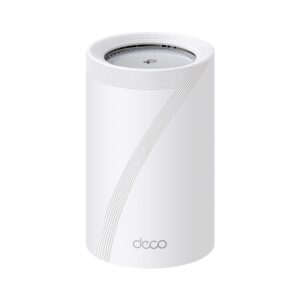
If you would rather nobody else held a management seat, a retail unit is the clean answer. A tri-band system such as the eero Pro 7 bought outright puts the account entirely in your name, with the same TrueMesh behaviour and the same automatic updates, and no operator console attached.
What is not yet known
Beyond naming Kinetic among a small group of beta testers, eero has not published which providers have the features switched on, and it has not said whether the corrective actions require customer consent during a call. The announcement points ISP partners to their account managers instead. Until that detail arrives, the honest position is that capability has been confirmed and policy has not.
The broader direction is clear enough. Managed home Wi-Fi keeps moving toward the operator, and the console on the other side keeps getting better at reading your house.