20 facts in comparison
eero Max 7 vs ASUS ZenWiFi BT10
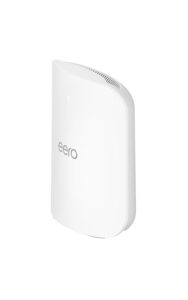
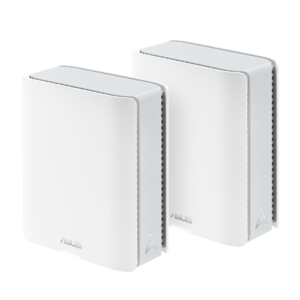
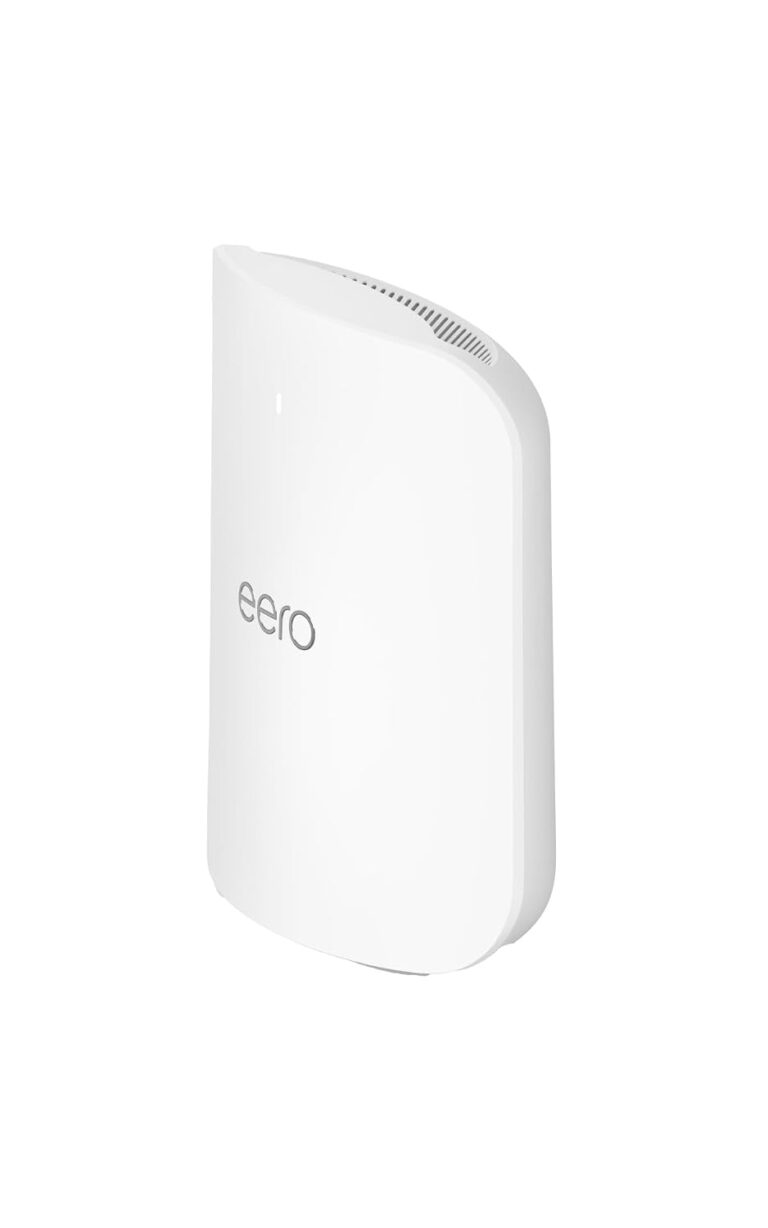
Both of these make their case on wired ports rather than on radios, and both make it well - for different owners. The eero Max 7 is a three-pack with four Ethernet ports on every node; the ZenWiFi BT10 is a two-pack with three ports per node, two of them multi-gig. The first thing to settle is how many nodes the house needs, because the coverage figures below follow the pack size as much as the hardware.
eero's strength is simplicity and the smart-home hub built into each node, which speaks Zigbee and Thread and makes the mesh the centre of a connected home rather than just its Wi-Fi. Its firmware is deliberately hands-off, and its security features and some parental controls sit behind a subscription. There is no USB port and no traffic-shaping control worth the name.
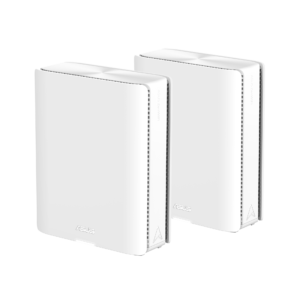
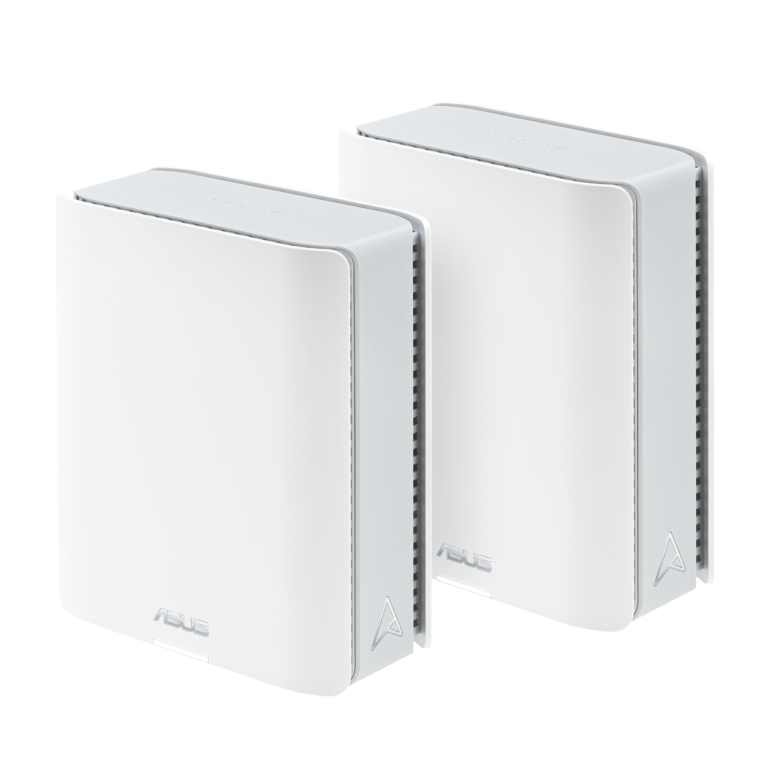
ASUS's strength is control. The BT10 ships with its security suite, a VPN server and adaptive QoS without a subscription, it carries a USB port for a drive, and its firmware exposes far more than eero's app ever will. It is the shorter unit, which matters on a shelf. Two nodes with 10 Gbps ports also make an excellent wired-backhaul pair for a house with Ethernet in the walls.
The weaknesses mirror each other. eero's hands-off approach frustrates anyone who wants to configure; ASUS's depth is wasted on anyone who does not. The BT10's two nodes cover less than the eero's three, and adding a third costs more than the difference.
Choose the eero for a large house, a smart-home setup on Zigbee or Thread, and an owner who never wants to open a settings page. Choose the ZenWiFi for a wired house, a technical owner, and a dislike of subscriptions.
Head-to-head points: every spec is scaled between these products only, so a product can score high here and modestly on its own page, where the VS Score measures it against the median of its class.
Where the eero Max 7 beats the ASUS ZenWiFi BT10
- A higher coverage area ?7,500 sq ft vs 6,000 sq ft
- A much higher units included ?3 vs 2
- A higher ethernet ports per unit ?4 vs 3
- Has smart home hub ?
Where the ASUS ZenWiFi BT10 beats the eero Max 7
- A much higher max wireless speed ?17,981 Mbps vs 4,300 Mbps
- Has USB port ?
- Has built-in security suite ?
- Has Quality of Service (QoS) ?
- A lower unit height ?186 mm vs 222 mm
Key real-world differences
The spec sheet pulls in both directions. These are the gaps big enough to shape the decision — with the actual figures, and what each one means in real-world use.
- Max wireless speedWireless4,300 Mbps vs 17,981 Mbps — 4.2× more for the ASUS ZenWiFi BT10
The combined theoretical throughput across all bands.
- Built-in security suiteFeatures & securityNo vs Yes — only the ASUS ZenWiFi BT10 has it
Network-level threat protection included or subscription-based.
- Coverage areaWireless7,500 sq ft vs 6,000 sq ft — 25% more for the eero Max 7
The total home size the included units are rated to cover.
- Quality of Service (QoS)Features & securityNo vs Yes — only the ASUS ZenWiFi BT10 has it
Prioritises gaming or video traffic over background downloads.
- Ethernet ports per unitPorts & backhaul4 vs 3 — 33.3% more for the eero Max 7
Wired ports on each mesh unit for TVs, consoles or desktops.
Which one should you buy?
There is no single answer — it depends on what you will actually use it for. Match your priority to the pick below.
- Best for wireless eero Max 7 takes the category 81 to 65 — driven by coverage area (7,500 sq ft vs 6,000 sq ft).
- Best for features & security ASUS ZenWiFi BT10 takes the category 92 to 75 — driven by built-in security suite (No vs Yes).
- Best for ports & backhaul eero Max 7 takes the category 93 to 64 — driven by ethernet ports per unit (4 vs 3).
- The safe all-rounder eero Max 7 wins 2 of 3 categories and tops the overall VS Score at 82.
Where each one falls short
eero Max 7
- Max wireless speed: 4,300 Mbps vs 17,981 Mbps
- Built-in security suite: No vs Yes
- Quality of Service (QoS): No vs Yes
- 1 spec is unreported (shown as Unknown) and excluded from its scores.
ASUS ZenWiFi BT10
- Coverage area: 7,500 sq ft vs 6,000 sq ft
- Smart home hub: Yes vs No
- Units included: 3 vs 2
- 2 specs are unreported (shown as Unknown) and excluded from its scores.
What matters to you?
Drag the sliders to weight each category and re-rank the products to suit your priorities.
Score breakdown
Wireless
Ports & backhaul
Features & security
Design
Specs last verified October 11, 2026eero Max 7: 20 of 21 specs verified (95%)ASUS ZenWiFi BT10: 19 of 21 specs verified (90%)Unverified specs show as Unknown — never estimated, never scored
What reviewers say
The bottom line
The eero Max 7 comes out ahead, scoring 82 to 72 on our VS Score. It leads on Wireless and Ports & backhaul. The ASUS ZenWiFi BT10 answers back with stronger Features & security. Pick the eero Max 7 unless Features & security matters most to you — then the ASUS ZenWiFi BT10 is the smarter buy.