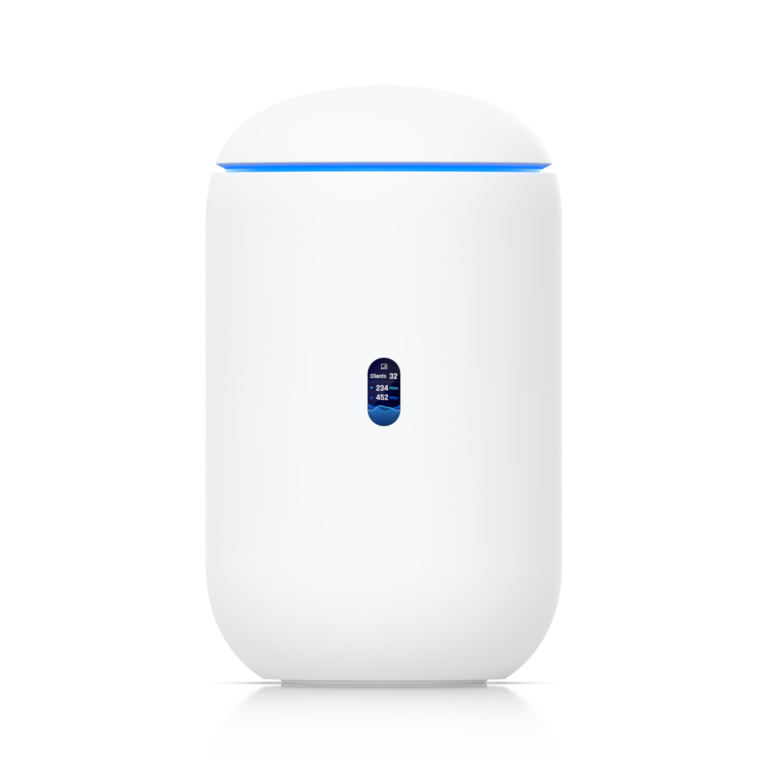

28 facts in comparison
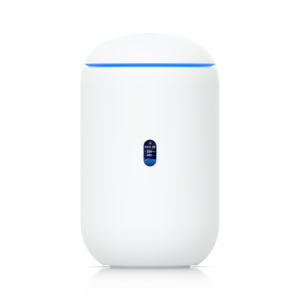
Ubiquiti UDR7 vs Ubiquiti U7 Pro XG
This comparison puts the Ubiquiti UDR7 and Ubiquiti U7 Pro XG side by side — two Wi-Fi Routers measured against the same 28-spec sheet, with every meaningful gap scored and explained. On our weighted VS Score the Ubiquiti UDR7 finishes ahead, 100 to 0 — a decisive result.
Street prices currently start at $ 314.99 for the Ubiquiti UDR7 and $ 251 for the Ubiquiti U7 Pro XG. That is a $ 63.99 premium for the Ubiquiti UDR7 — worth keeping in mind as you read the score gaps below. A transparency note before you dive in: the spec sheets are Ubiquiti UDR7 79% and Ubiquiti U7 Pro XG 0% complete. Anything unverified shows as Unknown and is left out of the scores — we never estimate a missing value.
Where the Ubiquiti UDR7 beats the Ubiquiti U7 Pro XG
No standout advantages.
Where the Ubiquiti U7 Pro XG beats the Ubiquiti UDR7
No standout advantages.
Which one should you buy?
There is no single answer — it depends on what you will actually use it for. Match your priority to the pick below.
- Best for wireless Ubiquiti UDR7 takes the category 100 to 0.
- Best for features & security Ubiquiti UDR7 takes the category 100 to 0.
- Best for ports & wired Ubiquiti UDR7 takes the category 100 to 0.
- Best for hardware Ubiquiti UDR7 takes the category 100 to 0.
- Best for design Ubiquiti UDR7 takes the category 100 to 0.
- On a budget Ubiquiti U7 Pro XG is the cheaper way in at $ 251, and still scores 0 overall.
- The safe all-rounder Ubiquiti UDR7 wins more of the categories that carry real weight, topping the overall VS Score at 100.
What matters to you?
Drag the sliders to weight each category and re-rank the products to suit your priorities.
Score breakdown
How the VS Score works — and what it can’t tell you
Every measurable spec is scored relative to this matchup: the best value here earns 100%, the worst 0%, and everything between scales linearly. Each spec then counts according to an editorial weight that reflects real-world impact — a battery-capacity gap moves the score far more than a colour-options list. The category scores above are the weighted results inside each group, and the overall VS Score rolls all of them together; the evidence line under each category names the specs that actually decided it.
Unknown values are never estimated. A spec a product doesn’t report simply drops out of that product’s scoring — it isn’t penalised with a guess — and a spec only one side reports can never produce a “win”. The trade-off is honest but real: a thinner spec sheet means a score built on fewer data points, which is why the completeness figures are disclosed under About this data.
Most importantly: a spec-sheet lead is not the same as a better product. Megapixels, gigahertz and benchmark points describe capacity, not experience — image processing, software optimisation, thermals, haptics and ergonomics decide how a device actually feels, and no table captures reliability or long-term support quality. Treat the scores as a structured summary of what can be measured, read the caveats under each key difference, and use the weight tuner to re-rank the comparison by what matters to you.
Wireless
The Wi-Fi generation supported; later is faster and handles more devices.
The combined theoretical throughput across all bands.
How many radio bands the router broadcasts (dual-band = 2, tri-band = 3, quad-band = 4).
A 6 GHz radio offers uncongested airspace for Wi-Fi 6E/7 devices.
The home size the router is rated to cover.
Serves multiple devices simultaneously instead of in turn.
Splits channels between devices for lower latency in busy homes.
Focuses the signal towards connected devices for better range.
How many devices the router is rated to handle at once.
Ports & wired
The internet-facing port speed; a multi-gig WAN futureproofs fast plans.
The number of wired Ethernet ports for devices.
At least one LAN port faster than 1 Gbps (2.5G/5G/10G).
Combines two ports into one faster connection.
USB ports for shared drives or printers.
Hardware
More CPU cores keep speeds up with many devices and features enabled.
The clock speed of the router's CPU.
More memory handles more simultaneous connections smoothly.
The number of antennas (internal or external).
Features & security
The latest Wi-Fi security standard.
Can join a whole-home mesh with compatible units (e.g. AiMesh, EasyMesh, OneMesh).
A separate network keeps visitors off your main devices.
Filter content and set time limits per device.
Prioritises gaming or video traffic over background downloads.
Host a VPN to reach your home network securely from anywhere.
Set up and manage the router from a phone app.
Network-level threat protection (e.g. ASUS AiProtection, TP-Link HomeShield).
Design
A lighter router is easier to place or wall-mount.
Can be mounted on a wall to save shelf space.
About this data
- Specifications are compiled from each manufacturer’s official spec sheet, cross-checked against trusted specification databases, and normalised into one schema so identical things are compared identically.
- Specifications last verified August 20, 2026.
- Data completeness: Ubiquiti UDR7 79% and Ubiquiti U7 Pro XG 0% of the 28 specs in this category. Anything we could not verify is shown as Unknown — never estimated — and is excluded from all scores.
- Prices and availability come from live retailer feeds via our shopping partners and refresh throughout the day; a missing price means no partner currently lists the product, not that it is discontinued.
- Want the full picture? Our editorial guidelines explain how we research products, weight the scores and stay independent.
- Spotted an error in a spec? Tell us and we will correct the sheet.
Where to buy
Prices and availability may change. Check the retailer before buying. We may earn a commission on purchases.
What reviewers say
The bottom line
The Ubiquiti UDR7 is the clear winner, scoring 100 to 0 on our VS Score. It leads on Wireless, Ports & wired and Hardware.