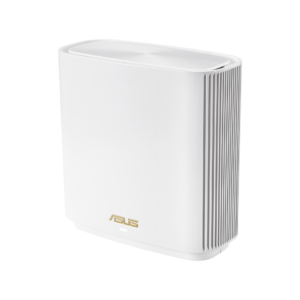
ASUS ZenWiFi BT10: Specs, Features, Pros & Cons
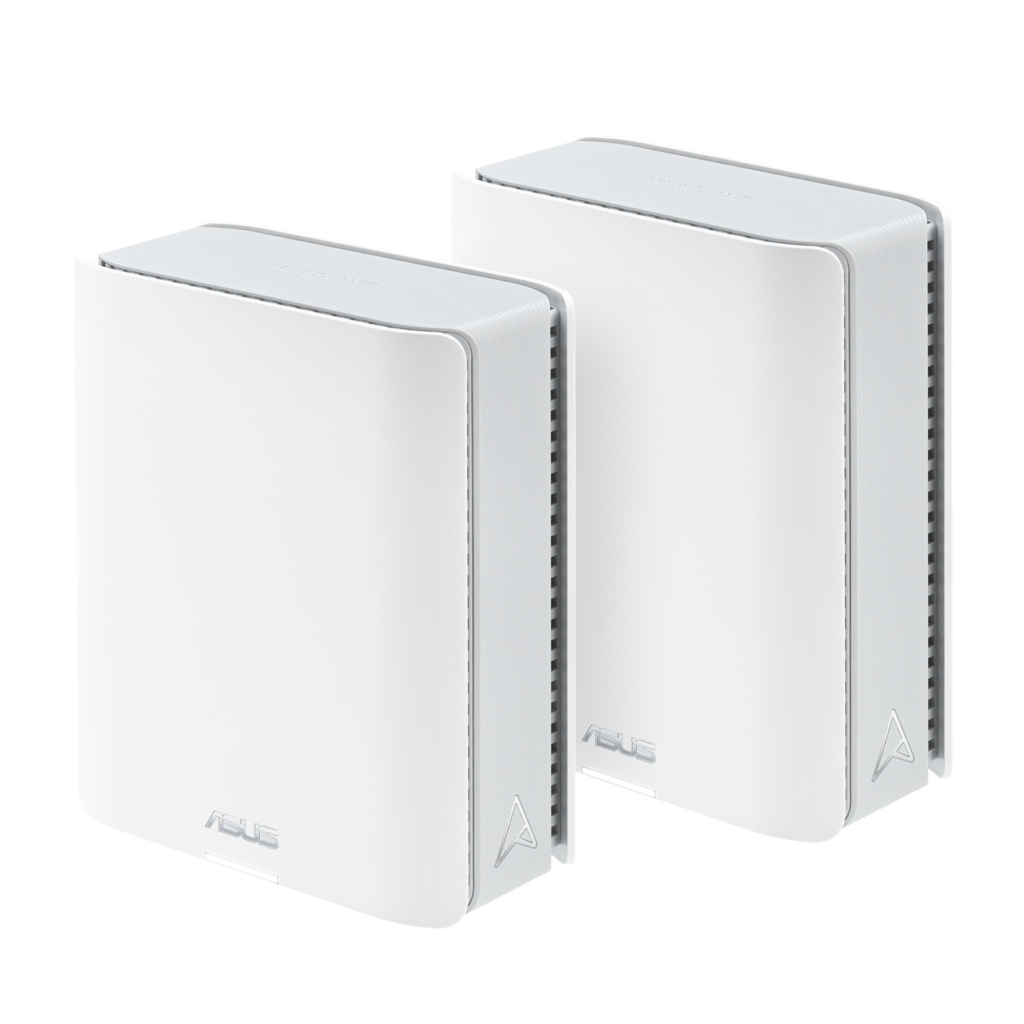
Two 10 Gbps ports on every node is an unusual allocation, and it makes one particular setup possible: wire the units together for a full 10 Gigabit backhaul and there is still a spare 10 Gigabit socket free at each end. That is a configuration normally associated with commercial equipment, and it is the strongest argument this system makes.
The wireless specification supports the same ambition. It is tri-band Wi-Fi 7 with a four-stream 6 GHz radio carrying the load, multi-band linking used intelligently for the connection between nodes, and a two-pack rated for a substantial area. Because it is an ASUS mesh, any compatible ASUS router can be added later to extend the system rather than requiring matching hardware.
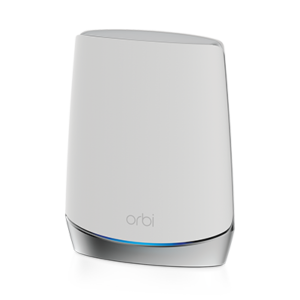
There is no dedicated backhaul radio, which is the trade being made. Wirelessly, node-to-node traffic shares bands with clients, and the 10 Gbps ports exist precisely so you do not have to rely on that. In a house where running a cable between two units is realistic, the cable does the job a reserved backhaul radio does in the NETGEAR Orbi 970, without using any airtime at all.
The security suite and parental controls are included for the life of the hardware rather than sold as a subscription, which over several years is a real difference against the main rivals.
Buy it if you can wire the nodes together, or intend to. If everything must travel wirelessly across a large house, a system with a reserved backhaul band will hold up better, and this one's greatest asset, those ports, goes unused.
Category strengths
Where the ASUS ZenWiFi BT10 beats the median
- A much higher max wireless speed ?17,981 Mbps vs 5,360 Mbps (median)
- Has built-in security suite ?
- Has USB port ?
Where the ASUS ZenWiFi BT10 trails the median
- A lower units included ?2 vs 2.5 (median)
- A slightly lower coverage area ?6,000 sq ft vs 6,500 sq ft (median)
How this VS Score was computed
Score 64: each known spec is measured against the median of all mesh wi-fi systems (16 products), then weighted; 50 means level with that median. In classes of six or more, a value beyond the class’s 10th–90th percentile range counts as that limit, so one extreme product cannot set the scale. 73% of the scoreable weight could be used; unknown values, features not applicable to this class and proxies (battery capacity where a rated life exists) add or remove nothing.
| Specification | This product | Cohort median | Score weight | Points moved |
|---|---|---|---|---|
| Max wireless speed | 17,981 | 5,360 | 1.5 | +75.0 |
| Tri-band | Yes | 73% of the class have it | 1 | +50.0 |
| Dedicated wireless backhaul | No | 33% of the class have it | 1 | −48.0 |
| 6 GHz band | Yes | 69% of the class have it | 0.8 | +40.0 |
| Multi-gig WAN | Yes | 75% of the class have it | 0.8 | +40.0 |
| Built-in security suite | Yes | 44% of the class have it | 0.5 | +25.0 |
| Smart home hub | No | 40% of the class have it | 0.3 | −14.4 |
| USB port | Yes | 38% of the class have it | 0.2 | +10.0 |
| Coverage area | 6,000 | 6,500 | 2 | −8.0 |
| Units included | 2 | 2.5 | 0.8 | −8.0 |
| Wi-Fi standard | Wi-Fi 7 | Wi-Fi 7 | 2 | +0.0 |
| Ethernet ports per unit | 3 | 3 | 1 | +0.0 |
Not scored: Max connected devices (unknown: not scored); Wired backhaul support (standard for the class (100% have it)); WPA3 (standard for the class (100% have it)); App control (standard for the class (100% have it)); Parental controls (standard for the class (100% have it)); Quality of Service (QoS) (standard for the class (92% have it)); Guest network (standard for the class (100% have it)); Unit weight (unknown: not scored).
Editor’s note
The ZenWiFi BT10 makes the strongest wiring argument of any mesh in its class. Each Orbi 970 satellite has only one port at that speed, so wiring an Orbi's backhaul uses up its fast socket, while the ASUS still has one free at each end.
The wireless is confident too: tri-band BE18000, MLO-based "smart" backhaul, and ASUS's AiMesh flexibility, meaning any AiMesh-capable ASUS router can extend the system later. A two-pack is rated for 6,000 sq ft. And because this is ASUS, the whole software drawer (AiProtection Pro security, adaptive QoS, parental controls, WireGuard and OpenVPN servers, even 4G/5G USB tethering as a failover WAN) comes free, permanently. Against eero and Orbi, both of which charge a subscription for their best features, that's a structural advantage.
There's no dedicated wireless backhaul band: node-to-node traffic shares the client radios, managed by MLO. Wired homes won't care, since this system is practically begging to be wired, but a large unwired house pushes traffic onto the same spectrum your devices use, which is where Orbi's reserved band earns its keep. The 2.4 GHz radio is a modest 2×2, there's no Zigbee or Thread hub, and ASUS publishes no device-count or weight figures.
For anyone who can run one Ethernet cable, I'd put it at the top of the Wi-Fi 7 mesh field. If you can't, weigh the Orbi 970's dedicated backhaul instead.
Specifications
Quality bars show where each figure sits between the lowest and highest of the 16 mesh wi-fi systems this VS Score is measured against.
Wireless
Ports & backhaul
Features & security
Design
Networking assessment
What the specification table does not say on its own: what this device needs to connect, what speeds are realistic, what costs extra, and where it falls short. Every statement below is read from the verified sheet or written by an editor — nothing is estimated.
Test environment
Research-based assessment: this brief is derived from the manufacturer’s published specifications for the ASUS ZenWiFi BT10 and the documents listed under Sources and verification. We have not run this unit on our own network, so nothing here is a measurement of ours.
Connection requirements
The pack contains 2 units; the main unit plugs into your modem or existing gateway and the rest are placed around the home.
Wired backhaul is supported: running Ethernet between the units gives every satellite the full speed of the main unit.
Throughput expectations
The Wi-Fi 7 headline of 17,981 Mbps adds together the theoretical peak of every band. A single device connects to one band at a time, so no client ever sees the total, and real-world speeds run well below the link rate even in the same room.
The 6 GHz band is only usable by Wi-Fi 6E or Wi-Fi 7 clients and has noticeably shorter range through walls; older devices stay on the 5 GHz and 2.4 GHz bands.
Firmware and subscriptions
ASUS's support page lists firmware 3.0.0.6.102_39436 for the BT10, released September 30, 2026, with a required Speedtest service change, Surfshark VPN login and security fixes to the web management interface. The router's administration menu includes automatic firmware updates.
A built-in security suite is on the spec sheet. On most brands the full version is a paid subscription after a trial; check the manufacturer’s page linked under Sources for the current terms.
Set-up and management run through the manufacturer’s app; check whether a local web interface is offered as well.
Parental controls are listed; on several brands the scheduling and filtering tiers sit behind the same subscription as the security suite.
Security support
WPA3 is supported, the current Wi-Fi encryption standard; devices that only speak WPA2 still connect in mixed mode.
A guest network is available for visitors and smart-home devices, keeping them off the network your computers use.
Security-update cadence is not something manufacturers publish as a specification; see Support and updates below.
Real-world household suitability
The manufacturer rates coverage at 6,000 sq ft. That figure assumes open space; brick, concrete and floors reduce it, and a large or multi-storey home is usually better served by a mesh system than by one router.
Known limitations
Not offered, according to the spec sheet: dedicated wireless backhaul, smart home hub.
2 specifications are not published by the manufacturer and are shown as Unknown rather than guessed.
Support and updates
ASUS's BT10 support page hosts the English user manual (October 2025 revision), quick start guides for the 1-, 2- and 3-packs, and the firmware archive.
Sources and verification
Where the specifications come from
- Official product pageasus.com
- Datasheet or manualdlcdnets.asus.com
- Support and firmware documentationasus.com
- Independent testingrtings.com
Verification
- First published
- Specifications last checked
- Sheet completeness
- 19 of 21 specifications verified; the rest show as Unknown and are never estimated or scored
- Page type
- Product specification page — Compiled from the manufacturer’s published specifications and the cited sources; this is not a hands-on test.
- Basis
- Research-based: specifications and editorial text were compiled from the documents listed here and the manufacturer’s published data. We have not tested this unit ourselves; where independent measurements are mentioned they belong to the linked publication.
Mesh Wi-Fi Systems with similar specs to the ASUS ZenWiFi BT10

Ratings & reviews
No reviews yet. Be the first to share your experience.
The bottom line
The ASUS ZenWiFi BT10 earns a VS Score of 64, above the median of the 16 mesh wi-fi systems it is measured against (a score of 50 is level with that median).
- Who it’s for
- Homes that can wire the nodes: dual 10G ports on every unit make a true 10G backhaul with a spare fast port at each end, and every software feature (AiProtection Pro, WireGuard, QoS) is permanently free.
- Who should look elsewhere
- Large unwired houses pushing heavy traffic wirelessly between nodes, because there's no dedicated backhaul band, and smart-home buyers wanting a Zigbee or Thread hub in their mesh.
- The trade-off that matters
- Wiring is the whole bet. Wired, its nodes talk over a cable that uses no airtime at all. Left wireless, node traffic shares your devices' radios, and quad-band rivals with a reserved band justify themselves.
- The main alternative
- NETGEAR Orbi 970: if Ethernet between rooms is impossible, its dedicated wireless backhaul is the feature this ASUS deliberately skips.
The VS Score is calculated from the weighted specifications above, each measured against the median of comparable mesh wi-fi systems — a shortlisting guide, not a substitute for your own priorities. See how we score.