No current price: no retailer we track lists it right now.
26 facts in comparison
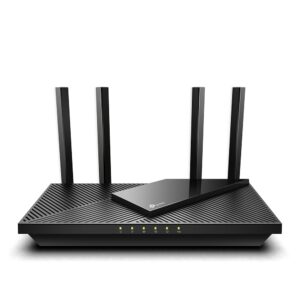
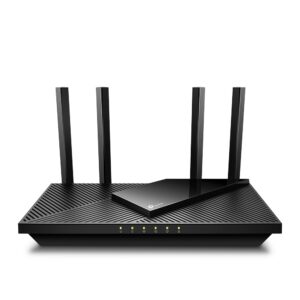
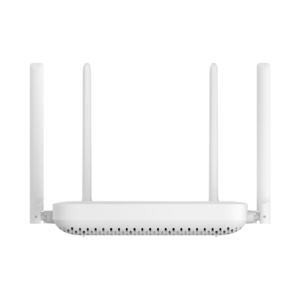
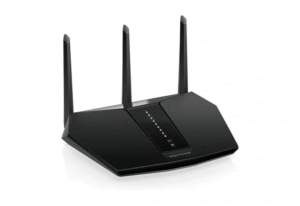
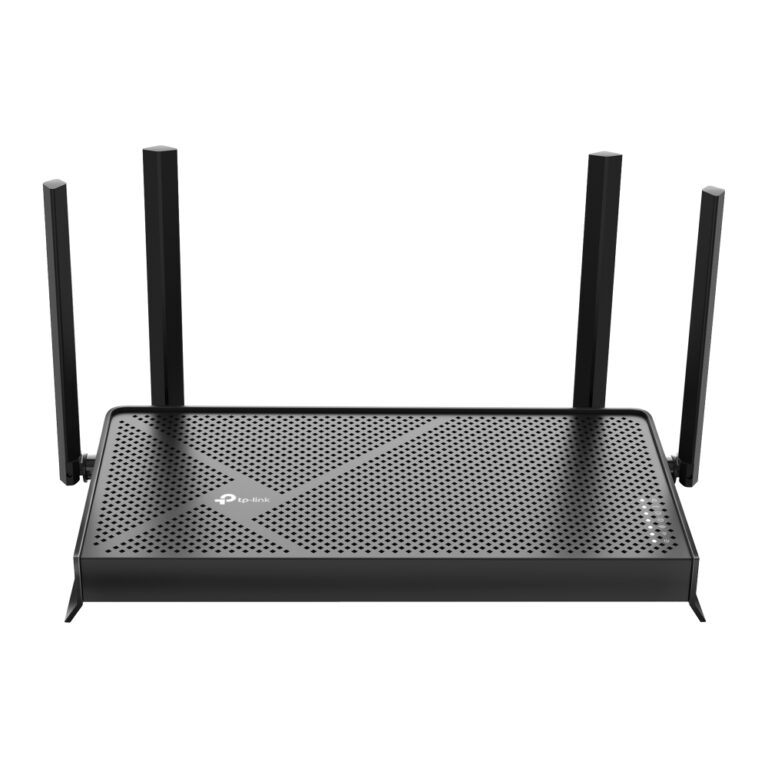
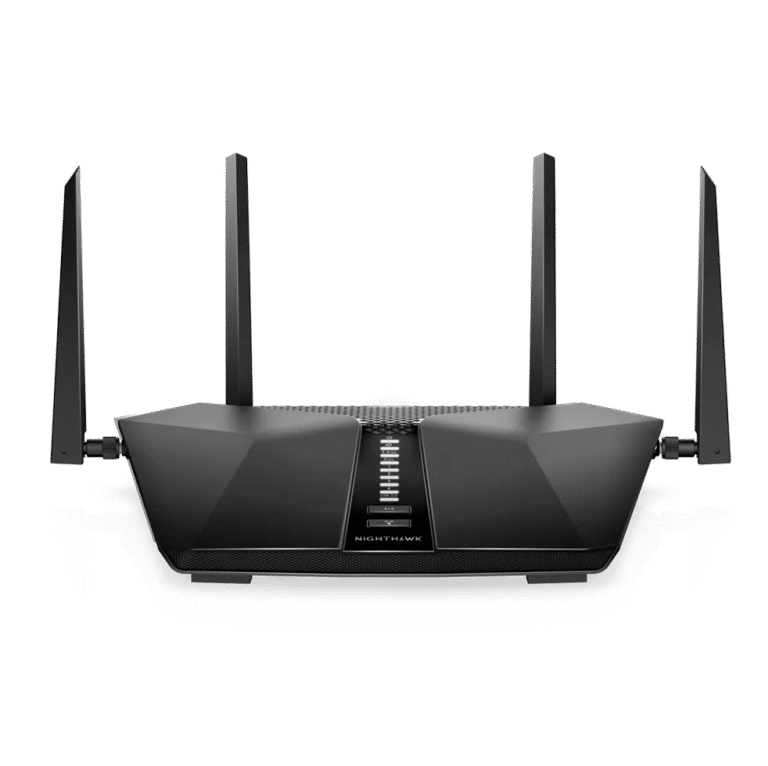
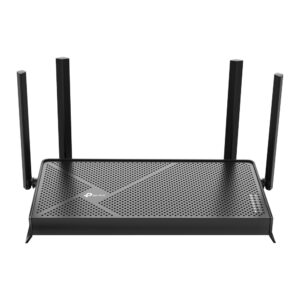
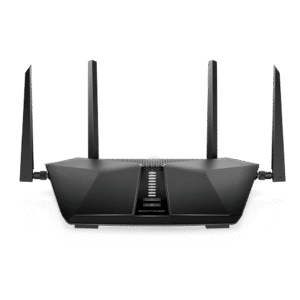
TP-Link Archer BE230 vs NETGEAR Nighthawk RAX50
A current entry-level Wi-Fi 7 router against a mid-range Wi-Fi 6 one from two years earlier, and the interesting thing is how the older router still wins on the number most people read first.
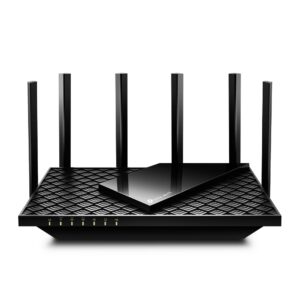
The Nighthawk RAX50 is rated in the AX5400 class, with a four-stream 5 GHz radio that supports 160 MHz channels. The Archer BE230 is a BE3600-class dual-band Wi-Fi 7 router with two streams per band. To a Wi-Fi 6 laptop or phone - which is most of what a house owns today - the Netgear can deliver more over the air, because it has more streams on the band that does the work.
What the TP-Link has is everything around the radio. A 2.5 Gbps WAN port means a multi-gig plan is not capped at the door, where the Netgear's gigabit WAN caps everything at a gigabit regardless of the radio. Multi-gig LAN follows. Wi-Fi 7's efficiency features help with many devices at once, and TP-Link bundles its basic HomeShield security where Netgear's Armor is a trial that becomes a subscription.
So the honest comparison is a fast radio behind a slow port against a modest radio behind a fast one. On a gigabit-or-slower plan with Wi-Fi 6 clients, the Netgear's four streams are the better everyday experience. On a plan above a gigabit, or in a house buying Wi-Fi 7 devices, the Archer's ports and newer standard matter more than the Netgear's stream count.
Both are dual-band with no 6 GHz radio, both have a single USB port on the Netgear only, and neither supports mesh with other brands. The buyer's internet plan, more than either spec sheet, should decide this one.
Head-to-head points: every spec is scaled between these products only, so a product can score high here and modestly on its own page, where the VS Score measures it against the median of its class.
Where the TP-Link Archer BE230 beats the NETGEAR Nighthawk RAX50
- Wi-Fi 7 Wi-Fi standard ?Wi-Fi 7 vs Wi-Fi 6
- A much higher WAN port speed ?2.5 Gbps vs 1 Gbps
- Has multi-gig LAN ?
Where the NETGEAR Nighthawk RAX50 beats the TP-Link Archer BE230
- A much higher max wireless speed ?5,400 Mbps vs 3,570 Mbps
Key real-world differences
The spec sheet pulls in both directions. These are the gaps big enough to shape the decision — with the actual figures, and what each one means in real-world use.
- Wi-Fi standardWirelessWi-Fi 7 vs Wi-Fi 6 — advantage TP-Link Archer BE230
The Wi-Fi generation supported; later is faster and handles more devices.
- WAN port speedPorts & wired2.5 Gbps vs 1 Gbps — 2.5× more for the TP-Link Archer BE230
The internet-facing port speed; a multi-gig WAN futureproofs fast plans.
- Multi-gig LANPorts & wiredYes vs No — only the TP-Link Archer BE230 has it
At least one LAN port faster than 1 Gbps (2.5G/5G/10G).
- Max wireless speedWireless3,570 Mbps vs 5,400 Mbps — 51.3% more for the NETGEAR Nighthawk RAX50
The combined theoretical throughput across all bands.
Which one should you buy?
There is no single answer — it depends on what you will actually use it for. Match your priority to the pick below.
- Best for ports & wired TP-Link Archer BE230 takes the category 100 to 36 — driven by WAN port speed (2.5 Gbps vs 1 Gbps).
- Top overall score TP-Link Archer BE230 tops the overall VS Score at 84 while winning 1 of 4 categories outright.
Where each one falls short
TP-Link Archer BE230
- No major spec weaknesses in this matchup — the gaps that exist are small.
- 8 specs are unreported (shown as Unknown) and excluded from its scores.
NETGEAR Nighthawk RAX50
- WAN port speed: 2.5 Gbps vs 1 Gbps
- Multi-gig LAN: Yes vs No
- 5 specs are unreported (shown as Unknown) and excluded from its scores.
What matters to you?
Drag the sliders to weight each category and re-rank the products to suit your priorities.
Score breakdown
Wireless
Ports & wired
Hardware
Features & security
Design
Specs last verified October 11, 2026TP-Link Archer BE230: 20 of 28 specs verified (71%)NETGEAR Nighthawk RAX50: 23 of 28 specs verified (82%)Unverified specs show as Unknown — never estimated, never scored
What reviewers say
The bottom line
The TP-Link Archer BE230 is the clear winner, scoring 84 to 66 on our VS Score. It leads on Ports & wired.
Latest comparisons